

Magento to Shopify Migration: Step-by-Step Guide
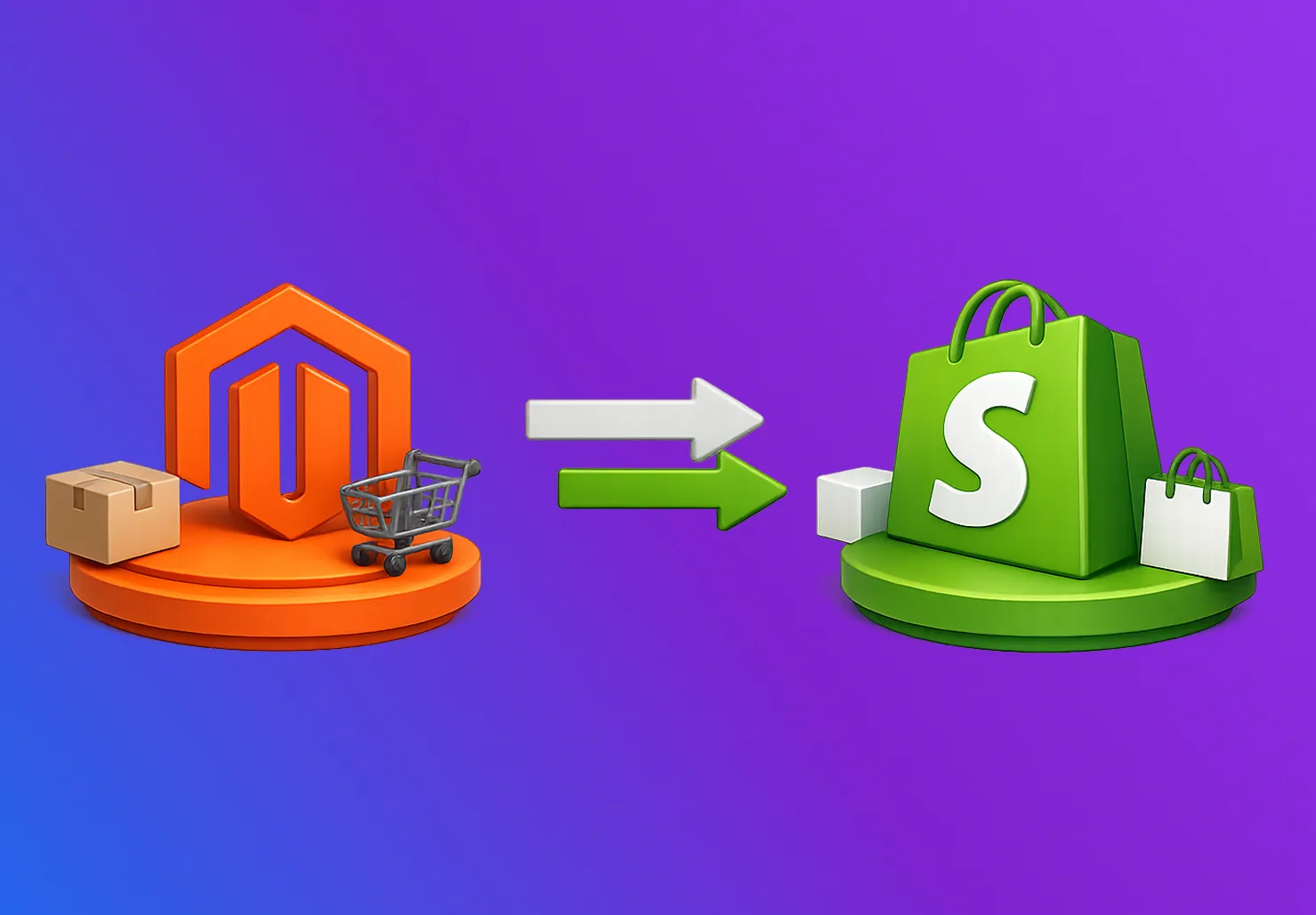
Migrating from Magento to Shopify involves transferring your products, customers, orders, content, and SEO assets from a Magento store to a Shopify store. The process typically includes auditing your existing store, exporting data, importing it into Shopify, configuring your new store, setting up redirects, and testing functionality before launch. Shopify has evolved into something genuinely remarkable for e-commerce businesses of all sizes. Brands like Gymshark, Tesla Motors, and Red Bull run on it. It’s fast, fully hosted, and doesn’t require a developer just to update a banner. When planned correctly, a Magento to Shopify migration can improve store management, reduce maintenance costs, and preserve existing search engine rankings. This guide walks through the Magento to Shopify migration process step by step, including how to move your data, avoid common migration mistakes, and protect your SEO performance during the transition. What Is Magento & Shopify? Magento and Shopify are two popular ecommerce platforms, but they serve different needs. Magento is an open-source platform that offers extensive customization and complete control over your online store. Shopify is a hosted ecommerce platform that manages hosting, security, updates, and performance for you. Magento is ideal for businesses with complex requirements, such as large product catalogs, custom pricing rules, and advanced B2B workflows. However, it requires ongoing technical management, including hosting, maintenance, and security updates. Shopify simplifies ecommerce management by handling the technical side of running a store. This allows businesses to focus on marketing, customer acquisition, and growth rather than platform maintenance. Why Migrate from Magento to Shopify? While Magento remains a capable platform, many businesses migrate because they want a solution that requires less technical management. Common reasons include: Shopify removes much of this complexity by providing hosting, security, maintenance, and platform updates as part of its ecosystem. Who Should Consider Migration From Magento to Shopify ? Magento to Shopify migration may be a good option for: What Data Can Be Migrated From Magento to Shopify ? Most ecommerce stores can transfer a significant portion of their existing data. This typically includes: The exact scope depends on your Magento configuration and any custom functionality currently in use. Magento to Shopify Migration Checklist Preparation plays a major role in migration success. Before transferring any data, create a migration plan that outlines every critical component of your store. Audit Your Existing Store Start by reviewing your current Magento store. Document: This helps identify what should be migrated, updated, consolidated, or removed. Back Up All Data Always create a complete backup before beginning migration. Your backup should include: Having a backup provides protection if unexpected issues occur during migration. Review Current SEO Assets SEO preservation begins before migration starts. Record important SEO information including: This information becomes valuable when implementing redirects and monitoring post-migration performance. Identify Essential Integrations Most ecommerce businesses rely on multiple third-party systems. Review all active integrations, including: Not every Magento extension will have a direct Shopify equivalent, so identifying alternatives early prevents delays later. Document Existing URL Structure One of the most important migration tasks involves preserving URL equity. Create a complete inventory of: This URL map will be used when implementing 301 redirects after migration. Define a Migration Timeline Migration projects should follow a clear timeline. Your timeline should include: Businesses with larger catalogs or custom functionality should allocate additional time for testing and troubleshooting. How to Migrate from Magento to Shopify Step 1: Create Your Shopify Store Start by setting up your Shopify account. Configure: Avoid rushing into design changes at this stage. Focus first on building a stable migration environment. Step 2: Export Data from Magento Export all required store data. This usually includes: Most stores export this information in CSV format. Before moving forward, review exported files to ensure data accuracy and completeness. Step 3: Import Data into Shopify Import your data using: After importing, carefully verify: Even small data inconsistencies can create issues after launch. Step 4: Organize Collections and Navigation Magento categories often need restructuring when moving to Shopify. Create: The objective is to make products easier for customers to discover and purchase. Step 5: Install Essential Shopify Apps Most stores require additional functionality after migration. Common app categories include: Stores with custom functionality often benefit from professional Shopify Development Services to ensure apps, integrations, and workflows align with business requirements. This is what we handle for clients whose stores are too valuable to risk on a partially automated process. How to Preserve SEO During Magento to Shopify Migration One of the biggest concerns during any migration is maintaining organic search visibility. Businesses that rely heavily on organic traffic often invest in dedicated Shopify SEO Services to protect rankings and maintain search visibility throughout the migration process. Create 301 Redirects 301 redirects tell search engines that a page has permanently moved. Redirect: Missing redirects are one of the most common causes of traffic loss after migration. Preserve Meta Titles and Descriptions Transfer important SEO metadata whenever possible. This helps maintain relevance and continuity for search engines. Maintain Internal Links Review all navigation menus, content links, and footer links after migration. Broken internal links create poor user experiences and weaken SEO performance. Submit an Updated XML Sitemap After launch: This helps search engines discover your new structure more quickly. Monitor Performance Closely Track: Minor fluctuations are common, but significant declines should be investigated immediately. Most migration-related SEO losses occur because redirects, URL mapping, and indexing checks are overlooked. Common Magento to Shopify Migration Challenges Data Mapping Issues Different platforms organize information differently. Products, categories, and custom attributes may require manual adjustments. URL Structure Changes Magento and Shopify often generate different URL formats. Without proper redirects, ranking losses can occur. App Compatibility Not every Magento extension has a direct Shopify equivalent. Evaluate alternatives before migration begins. Custom Functionality Stores with highly customized Magento environments may require custom Shopify development to recreate certain features. Businesses with complex integrations or enterprise-level requirements often work with experienced Shopify migration specialists to ensure data accuracy and maintain business continuity throughout the
E-commerce Trends You Need to Know in 2026
Ecommerce has always been dynamic, but 2026 is shaping up to be a pivotal year. Ecommerce trends 2026 are no longer just about selling online, they’re about creating experiences, building trust, and integrating every part of the digital journey seamlessly. We’ve been watching the industry evolve for years, seeing how businesses adapt from ecommerce trends 2019 to now. Some changes are subtle, like smarter packaging, while others completely redefine how customers engage with brands. We’ve worked with clients across industries, from sustainable fashion brands to health and fitness startups, helping them anticipate what’s coming next. And one thing is clear: the businesses that thrive in 2026 won’t just follow trends, they’ll anticipate them, blend creativity with technology, and make the shopping journey unforgettable. The Evolution of Ecommerce: From 2019 to 2026 Looking back, the journey from ecommerce trends 2019 to today is fascinating. In 2019, ecommerce was largely about convenience and basic digital storefronts. The focus was on functional websites, standard product pages, and simple checkout flows. Fast forward to 2026, and the game has completely changed. Now, every touchpoint matters. Customers expect personalized experiences, intuitive navigation, and immediate gratification. They want brands to understand their needs, provide solutions quickly, and make shopping delightful at every step. We’ve seen this in action with one of our clients in the sustainable fashion sector. Initially, their website followed generic templates, but once we implemented a design that highlighted their brand story, offered seamless product discovery, and integrated shopify marketing strategy tools, their engagement skyrocketed. Another major evolution is in data utilization. Ecommerce businesses today analyze user behavior to predict needs, suggest relevant products, and optimize conversion paths. B2B ecommerce trends 2020 showed the early stages of personalization, but now, predictive AI-driven recommendations are mainstream. We help clients integrate analytics seamlessly so that every click, scroll, and purchase informs the next move. In short, the ecommerce landscape has shifted from transactional to experiential, from reactive to proactive. 2026 is about businesses anticipating what customers want, often before they even realize it themselves. Experience-First Ecommerce Is No Longer Optional If there’s one thing that stands out in ecommerce trends 2026, it’s the emphasis on experience. Customers are no longer satisfied with simple online stores, they demand immersive, intuitive, and engaging shopping experiences. Experience-first ecommerce combines user interface, storytelling, product presentation, and even post-purchase engagement into one seamless journey. One client, a nutrition and diet brand, wanted more than just a functional site, they wanted customers to feel inspired from the moment they landed. By integrating dynamic product displays, interactive quizzes, and personalized recommendations, we not only increased conversions but also built long-term loyalty. Experience-first ecommerce also touches mobile responsiveness, speed, and accessibility. With over 60% of ecommerce purchases now happening on mobile, even a minor lag or confusing navigation can cost sales. Our team ensures every design decision, from checkout flows to pop-ups, is intentional, keeping engagement and conversion at the forefront. Marketing also plays a role in experience. From shopify marketing services to branding marketing shopify, the way a customer interacts with emails, ads, and social content contributes to their overall perception. A seamless, consistent experience across platforms strengthens trust and encourages repeat business. In essence, 2026 isn’t just about products; it’s about crafting moments. Each click, scroll, and interaction is an opportunity to leave a lasting impression. Businesses embracing this trend early will find themselves ahead of the curve. Ecommerce Web Design Trends Shaping Buying Decisions Web design has gone beyond aesthetics, it’s a strategic tool in ecommerce trends 2026. The right design can guide buying decisions, enhance credibility, and create memorable brand experiences. Modern ecommerce websites emphasize minimalism, interactive elements, and personalization. Dark mode, micro-animations, and dynamic product visuals are not just for looks, they engage users and subtly influence their choices. For one of our clients, a Shopify Plus store specializing in sustainable food, implementing shopify plus ecommerce design agency strategies with immersive visuals increased their average session duration by 42%. Personalized design elements, such as recommendations, user-specific promotions, and adaptive layouts, are becoming mainstream. Even something as simple as altering product placement based on previous behavior can have measurable impacts. Bullet points that summarize design trends today include: Our approach blends strategy and creativity. By leveraging shopify ecommerce solutions and expert UX/UI practices, we ensure websites are not only visually appealing but also conversion-focused. For ecommerce businesses in 2026, design isn’t optional, it’s a key driver of growth. Smarter Ecommerce Packaging Trends That Build Brand Loyalty Packaging has evolved from simple protection to a powerful marketing tool. Ecommerce packaging trends in 2026 focus on sustainability, personalization, and creating “unboxing experiences” that delight customers. Brands are moving towards eco-friendly materials, custom inserts, and aesthetically pleasing designs that customers want to share on social media. For instance, a client in sustainable fashion saw a 27% increase in social shares after we implemented signature packaging with reusable materials and personalized messages. Packaging now also reinforces brand identity. Colors, textures, and design elements all communicate the brand story. Combined with subscription-based services or promotional inserts, packaging becomes a touchpoint for engagement, encouraging repeat purchases. Incorporating shopify marketing partners into packaging campaigns, like QR codes linking to curated content or loyalty programs, can also elevate customer interaction. Packaging is no longer just functional; it’s a silent salesperson that works 24/7 to build trust, delight, and brand loyalty. Smarter packaging, paired with a seamless online experience, ensures that the entire journey from click to delivery strengthens customer relationships and turns buyers into advocates. Ecommerce Fraud Trends and the Rising Importance of Trust Ecommerce fraud trends continue to evolve, making trust a non-negotiable component of online business. In 2026, customers are acutely aware of cybersecurity, privacy, and authenticity. Fraud prevention is not just a back-end concern, it’s part of the user experience. Payment security, two-factor authentication, and transparent policies are essential. Customers abandon carts instantly if something feels suspicious. One health and nutrition client had recurring abandoned carts until we integrated advanced fraud detection tools