

How to Start Shopify Print on Demand?
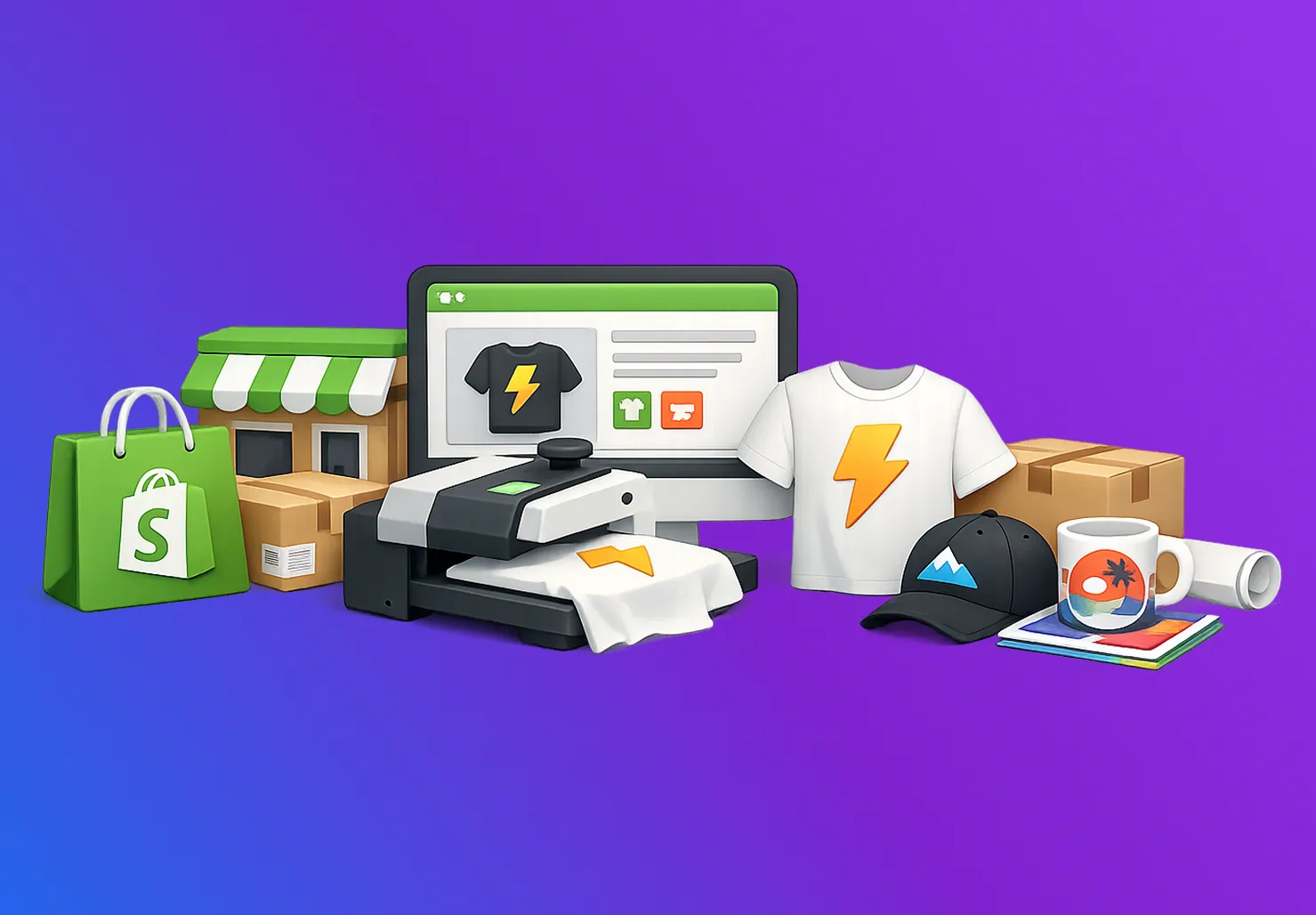
Starting a Shopify print-on-demand business in Dubai or the UAE involves choosing a niche, creating designs, connecting a print-on-demand supplier to your Shopify store, adding products, setting pricing, and building a marketing strategy. With print on demand, products are only produced after a customer places an order, making it a low-risk ecommerce model for entrepreneurs across Dubai, Abu Dhabi, Sharjah, and beyond. What Is Shopify Print on Demand? Shopify print on demand is a business model where products are printed and fulfilled only after a customer places an order through your Shopify store. Instead of purchasing inventory upfront, you connect your store to a print on demand supplier. When an order is received: Common print on demand products include: This makes print on demand one of the most accessible ecommerce business models available today. How Does Shopify Print on Demand Work? Step 1: Choose a Niche The most successful print on demand stores are usually built around a specific audience rather than a broad product catalog. Examples include: A focused niche makes it easier to create products, content, and marketing campaigns that resonate with buyers. Questions to Ask The more specific the niche, the easier it becomes to stand out. Step 2: Validate Demand Before building your store, confirm that people are actively searching for products in your niche. Useful tools include: Look for: Competition is usually a sign that customers already exist. Step 3: Create Your Brand Many print on demand stores fail because they look like collections of random products. Instead, build a recognizable brand. Your brand should include: Strong branding increases trust and improves conversion rates. Step 4: Set Up Your Shopify Store Once your niche and branding are established, create your Shopify store. Basic setup includes: If you’re new to ecommerce, follow a structured Shopify Store Setup Process to ensure your store is configured correctly from day one. Step 5: Connect a Print on Demand Supplier Your supplier handles printing, fulfillment, and shipping. The right supplier depends on: This is one of the most important decisions in your business because fulfillment directly affects customer satisfaction. What Can You Sell with Print on Demand? You can sell a wide range of custom products, including: Is Shopify Print on Demand Profitable? Yes, but profitability depends on product selection, branding, pricing, and marketing.In the UAE market, profitability often improves when stores target specific communities, professions, hobbies, or local interests instead of competing broadly against international marketplaces. The barrier to entry is low, which means competition is high. Stores that simply upload generic designs often struggle to generate consistent sales. Successful Shopify print on demand businesses typically focus on: The advantage is that financial risk remains relatively low because inventory is only produced when an order is placed. Best Shopify Print on Demand Apps Choosing the right POD app is critical because it affects product quality and delivery. Printful Printful is one of the most established print on demand providers for Shopify. Printify Printify connects merchants with multiple printing partners worldwide. Gelato Gelato specializes in localized production through global fulfillment partners. SPOD SPOD focuses on fast production and fulfillment. How to Design Shopify Print on Demand Products That Actually Sell Great designs solve a problem, express an identity, or create an emotional connection. The most successful products usually: Avoid: Originality matters more than complexity. Pricing Your Shopify Print on Demand Products Pricing should account for: For example: Item Cost Product $12 Shipping $5 Total Cost $17 Sale Price $29.99 Gross Margin $12.99 Always calculate profitability before scaling advertising. Setting Up Product Pages for Conversions Product pages play a major role in whether visitors become customers. Each page should include: Clear Product Titles Use descriptive titles that explain the product clearly. High-Quality Mockups Show products from multiple angles and in real-world settings. Detailed Descriptions Explain: Trust Signals Include: These elements help reduce purchase hesitation. Shopify SEO for Print on Demand Stores Many store owners focus only on paid advertising. Long-term growth usually requires organic traffic as well. Shopify SEO helps attract customers actively searching for products. Important areas include: Keyword Research Target keywords with buying intent. Examples: Collection Page SEO Collection pages often rank more easily than individual products. Optimize: Product Page SEO Every product page should have: Content Marketing Publishing helpful content can attract visitors before they are ready to buy. Examples: SEO creates long-term traffic that does not disappear when ad spend stops. How Do You Market Your Shopify Print on Demand Business? Traffic is essential for sales. A balanced marketing strategy may include: Search Engine Optimization Build visibility through organic search. Google Ads Capture high-intent searches. Social Media Marketing Create awareness and engagement. Influencer Partnerships Leverage existing audiences within your niche. Email Marketing Retain customers and encourage repeat purchases. Many successful stores accelerate growth by combining these channels through a broader digital marketing strategy for ecommerce businesses, helping them attract qualified traffic, increase conversions, and build long-term brand visibility. What Are the Most Common Shopify Print on Demand Mistakes? Many new store owners make similar mistakes. Choosing a Broad Niche Generic stores struggle to stand out. Ignoring SEO Organic traffic compounds over time. Using Low-Quality Mockups Presentation directly affects trust. Copying Competitors Unique brands are easier to remember. Poor Pricing Strategy Growth without profit is not sustainable. Avoiding these mistakes improves your chances of building a successful business. How Much Does It Cost to Start a Shopify Print on Demand Business? Typical startup costs include: Expense Estimated Cost Shopify Subscription $29–$79/month Domain Name $10–$20/year POD Apps Free–Paid Plans Design Tools Optional Marketing Budget Variable Many entrepreneurs launch with relatively small budgets and reinvest profits as they grow. Frequently Asked Questions Can you start Shopify print on demand with no money? You can start with minimal upfront investment, but most businesses benefit from some budget for branding, apps, or marketing. Can I sell print on demand products in the UAE? Yes. Entrepreneurs in Dubai and across the UAE can use Shopify with print-on-demand suppliers to sell locally and
How to Choose a Shopify Development Agency in Dubai ?
Launching or scaling a Shopify store sounds simple on the surface. Pick a theme, upload products, connect payments, and go live. Reality looks very different. A serious ecommerce brand quickly discovers that design decisions influence conversions, performance affects ad ROI, and technical structure impacts SEO. That’s exactly where a Shopify development agency enters the picture. We’ve worked with startups launching their first online store and established brands migrating from platforms that were slowing them down. The difference between a store that simply “exists” and one that consistently sells usually comes down to how strategically the site was built. Choosing the right team is less about credentials on a website and more about how they think, how they solve problems, and how deeply they understand ecommerce behavior. This article breaks down what actually matters when selecting the right partner. What Is a Shopify Development Agency? A Shopify development agency specializes in designing, building, customizing, and optimizing online stores on Shopify. The work usually goes far beyond installing a theme. The real job involves structuring a store so customers move smoothly from curiosity to purchase. Think of it as a blend of technology, design, and ecommerce psychology. Many businesses initially hire a freelancer to “set up Shopify.” The site goes live quickly, but growth stalls. Product pages don’t convert well, page speed drops when traffic increases, and integrations start breaking when marketing tools are added. That’s usually the moment brands begin looking for a more structured partner. A professional Shopify web development agency focuses on solving these deeper challenges. From the outside, the work might look like simple development tasks. Behind the scenes, it often includes: We’ve seen many founders come to us after launching their first store using a generic template. Their traffic looked decent, but sales remained unpredictable. Once the site structure was rebuilt around storytelling and product clarity, conversions began stabilising. A Shopify ecommerce development agency essentially helps translate business goals into a digital storefront that works reliably under real market conditions. In practical terms, that means combining design logic, development precision, and ecommerce strategy. How to Evaluate Shopify Development Agency Expertise? This is where most businesses get tripped up. They look at an agency’s homepage, see some recognizable brand logos, and make a decision based on surface-level signals. That’s understandable, but it’s a shortcut that often leads to mismatched partnerships and disappointing projects. Verified Client Reviews The first thing to look at seriously is verified client reviews, not just the testimonials on the agency’s own website. Every agency curates their own testimonials, that’s marketing, not evidence. What you want are reviews on independent platforms like Clutch, Google, and the Shopify Partner Directory. Look for patterns across reviews, not just ratings. Do clients consistently mention clear communication and on-time delivery? Or are there threads about missed milestones, vague timelines, and unresponsive support after handover? Case Studies Case studies are the second major filter, and the standard for a useful case study is simple: problem, approach, result, with real numbers. An agency saying they “improved conversions” for a client is meaningless without context. Did they improve a 0.5% conversion rate to 1.8%? Did they cut page load time from 8 seconds to 2.1 seconds? They migrate a 10,000-product Magento catalogue to Shopify in six weeks with zero data loss? Those are the kinds of specifics that tell you an agency understands what they’re being measured on. We pay close attention to this when we assess potential partners, because an agency that doesn’t measure its own outcomes is unlikely to be focused on measuring yours. Technical Depth Technical depth in 2026 looks different from what it did three years ago. Shopify has changed significantly. Agencies now need genuine fluency in Checkout Extensibility (replacing the old checkout.liquid model), Hydrogen for headless builds, modern app architecture, and B2B logic. When evaluating an agency, ask directly: have they built with Checkout Extensibility? Do they have Hydrogen experience? Can they handle ERP and CRM integrations? How do they approach Core Web Vitals optimisation? Agencies that are current on Shopify’s evolution will answer these questions fluently. Agencies that are running on outdated knowledge will hedge or redirect. Communication And Process Communication style and process transparency are indicators that are easy to dismiss as soft criteria but turn out to be significant in practice. Ask every agency the same questions: what does your project kickoff process look like? How do you handle scope changes? What does a typical weekly update look like? How do you handle bugs discovered after launch? The answers reveal how structured they are, how they manage client expectations, and whether they have a genuine process or are improvising project by project. For businesses in Dubai and the MENA region where time zone alignment and response speed matter, an agency’s communication infrastructure is a practical as well as cultural consideration. Post-Launch Support Finally, the post-launch support offering is something too many businesses forget to evaluate during the selection process, only to regret it six weeks after launch when a payment gateway integration breaks on a peak sales day. A strong Shopify development agency doesn’t disappear after handover. They should offer structured maintenance retainers, a clear process for reporting and resolving post-launch issues. A strong Shopify development agency doesn’t disappear after launch. Instead, they provide Shopify support and maintenance services to keep your store secure, updated, and optimized. What Services Does a Shopify Development Agency Offer? The scope of what a full-service Shopify ecommerce development agency provides is broader than most clients initially expect, and understanding the full range helps you assess whether an agency can serve your needs beyond the initial build. The services offered by a Shopify development agency usually span several areas. Some agencies specialize in design, while others handle the full ecommerce lifecycle. Understanding these services helps businesses decide whether an agency aligns with their needs. Store Setup and Configuration Many brands start with foundational services. This includes: Although these tasks sound basic, their structure influences the long-term scalability of
Boosting Local Visibility with Voice Search SEO in [2026]

Voice search is changing how people find businesses online. In 2026, a larger percentage of users are using voice assistants like Siri, Google Assistant, and Alexa to search for local SEO services. That means if your business is not optimised for voice search, then you could be missing out on a lot of your targeted customers right in your neighbourhood. Voice search SEO helps your business show up when someone says things like: These voice searches are natural and often based on questions and location-specific too, and they require a new approach to local SEO. Key Challenges (And Easy Solutions) 1: Mostly, the voice searches use natural and longer phrases. The user has to speak a full sentence instead of using keywords. Solution:Try to use more conversational keywords in your content. Think “best plumber in Dallas open now” instead of just voice searching for “Dallas plumber.” 2: Most of the voice searches are questions People ask things like “How late is the pharmacy open?” or “Where can I get gluten-free pizza?” Solution:Always create an FAQ section on your website with the real questions and clear answers. Include the location keywords where possible. 3: Speed and the mobile experience also matter Sometimes voice searches are done on-the-go and often on the mobile. A slow or hard-to-use site can cause users to leave. 1 in 2 users, almost (53%) will leave a mobile site that takes longer than 3 seconds to load. Solution:Make sure that your website loads fast and works well on the phones. Compress the images, use designs which are mobile-friendly, and test your site speed regularly. 4: Your listings must be accurate Voice assistants pull data from Google Business, Apple Maps, Yelp, etc. If your info is wrong then you would not show up in Google search results. Solution:Keep your Google Business Profile updated. Make sure that your hours, phone number, and address are correct on all of the platforms. 5: Lack of featured snippets Voice assistants often read out featured snippets from the search results. If your site does not have any feature snippets then you are losing the audience in your own hands. Solution:Answer the common questions clearly and concisely in your content. Use bullet points, headers, and use simple language so Google can easily pull snippets out from your page. Key Takeaways: The Rise of Voice Search Optimization Voice search is no longer a futuristic concept, it is a key part of how people interact with technology today. With the growing use of virtual assistants like Siri, Alexa, and Google Assistant the voice-enabled searches are transforming user behaviour and digital marketing strategies. That is why today, more people are using it every day. Here is why voice search is growing: In fact: If you ignore this, then you are missing out on a lot of your targeted audience. Voice Search’s Impact on Local SEO Voice search is not like a regular Google search. It is a little different. Let us break it down for you. Here is how: That is why you need special local SEO for voice search to get real results. Top Tips For Voice Search SEO Here is how to make your business voice search-ready: 1. Use Conversational Keywords Always think with the mind of the user, you have to use such conversational keywords that local area people generally use and can search on the Google search bar. Instead of short keywords like “pizza Dubai,” use phrases like: This is voice search SEO tip #1: Always talk like your targeted audience. 2. Answer Questions for Search Results Create an FAQ section. Use real questions that people generally ask in their daily routine. For Example: Q: What is the best digital solutions organization near me?A: The Meta Future is a well-known organization that provides you with the best digital solutions. This will boost your voice search ranking in Dubai and make your website more useful. 3. Get Listed on Google My Business Make sure that your Google Business Profile is: This is a must for Voice SEO for local businesses. 4. Speed Up Your Website Voice assistants value quick speed just like all users. Thus, Voice search becomes impossible with a slow website 5. Use Local SEO Strategies If you want to perform well in local SEO for voice queries, you should have the following: This will make you more visible to the voice assistants. 6. Add Schema Markup Schema is used to communicate with search engines in a way that helps them understand your content more accurately. It helps them know: It is like supplying Google with a map to your store. 7. Optimise for Siri and Google Assistant Various assistants draw data from various sources: By 2025, 50% of all smartphone users are expected to use voice assistants daily. Be sure to have your information correct on all platforms. It’s a smart SEO performance for Siri and Google Assistant. Unique Voice SEO Factors Here are some of the unique SEO factors: Multilingual SearchesDubai’s diverse population means that the voice queries are often in both English and Arabic. Businesses must optimize content in both languages to reach a wider range of audiences. High Mobile and Smart Device UsageDue to the high percentage of smartphone and smart speaker adoption rates. The frequency of voice searches increases, especially on the go. Local Intent Is StrongMany users search for services like “near me” or ask location-specific questions. Accurate Google Business Profile and Apple Maps listings are very crucial to answer these queries. 46% of voice search users look for a local business every day Tourism-Driven Queries As a major tourist hub, Dubai gets a high volume of voice searches from visitors looking for restaurants, attractions, medical help, and shopping in real time. Accent and Pronunciation VariationsVoice assistants may struggle with the wide range of non-native English accents common in Dubai. Optimising for natural and clear phrasing helps with voice recognition. Partnering with The Meta Future At The Meta Future, we offer you voice search SEO
Shopify VS WordPress: Complete Guide Small Business Owners

If you are a business owner who is going to launch the first online store, on a marketer scaling content strategy, or if he/she is a startup founder who wants to have digital growth then choosing the right platform is a big decision. Shopify and WordPress are two of the most popular website builders in today’s peaking digital market, both of them have their own distinct SEO features. But in 2025, with AI-enhanced search engines and increasing competition, your platform choice can directly impact your visibility, traffic, and growth. Challenges Faced By Small Business Owners Solutions The Role of SEO Optimization Check these out: By 2025, with an increase in competition and an increase in AI-enhanced search (eg, Google SGE), your SEO can destroy or hinder your growth. Whether you own a physical store or run an e-commerce brand, strong SEO means more traffic, more confidence, and more sales. For small businesses and startups, ranking on search engines can be the difference between steady growth and inactiveness. Choosing a platform with strong SEO support is not optional, it’s important Quick Overview: Shopify vs WordPress This comparison is specially designed to help the founders, marketers, and small business owners to understand the core SEO differences before committing to one platform. Here’s a quick side-by-side comparison: Feature Shopify WordPress (with WooCommerce) SEO Readiness Built-in but limited Highly customizable Ease of Use Beginner-friendly Requires some technical skill Hosting Hosted solution (fast) Self-hosted (depends on provider) Plugin Support Limited app store Extensive plugin ecosystem Blog Capabilities Basic blogging Excellent for blogging & content SEO Technical SEO Control Limited Full access to core files & configs Key SEO Features Compared Shopify Pros Shopify Cons WordPress Pros WordPress Cons Performance Comparison Across Platforms If you are a local business owner from salons and restaurants to law firms or fitness coaches, the local SEO determines how easily the customers find you on Google Maps or “near me” searches. Both Shopify and WordPress support local SEO. Local SEO is important for service providers, restaurants, or any brick-and-mortar business. Shopify for Local SEO WordPress for Local SEO Complete adaptation of: Best SEO Tools You Can Use These tools are essential regardless of platform: Fun Fact: Companies with customized Google Business Profiles get 7x more clicks (Google Internal Data). Actual Data and Performance Insights Here is a simple visual showing the SEO capabilities of Shopify vs. WordPress: Key Takeaways: Choosing the Right Option for Your Business Type Here is how to decide based on the kind of business you are running: Shopify is ideal for: WordPress is ideal for: Common SEO Issues Across Both Platforms Shopify Users Often: WordPress Users Often: Just for your information, here are 8 more common seo mistakes are highlights which you must avoid: How The Future of Meta Empowers Your SEO Success At The Meta Future, we specialise in helping startups, small businesses, and ambitious brands to boost their SEO on both WordPress and Shopify. If you are a local service provider or an e-commerce entrepreneur, then our custom approach delivers you the best positive and success oriented results. Our offer: The speed of the website, mobile responsiveness, and the technical SEO for the crew, regardless of whether you use Shopify or WordPress, make a difference between good devices and real results. Final Thoughts So, if you are a small business owner, marketer, or the startup leader who is still wondering which platform gives you the SEO edge, then here is the bottom line: And if you are serious about making SEO work, regardless of the platform, then The Meta Future is here to support you with the expert tools, strategy, and strategic implementation. Remember that SEO is not about the device, it is about strategy, so choose a platform that converts traffic to trust and income.
Content Marketing for Therapists: An Ethical, Low-Pressure Guide for 2026

If the phrase “marketing yourself” makes you a little uncomfortable, you’re in the right place — and you’re a better therapist for it. The instinct that says “I didn’t train for years in clinical work to become a salesperson” is the same instinct that makes you good with clients. The good news: the most effective content marketing for therapists isn’t salesy at all. It’s an extension of what you already do — helping people feel understood before they ever walk through your door. This guide is different from the usual “9 tips” listicle. We’ll cover the strategies that actually work, but we’ll do it through the lens of the real obstacles therapists face: limited time, fear of visibility, and — most importantly — the ethical lines you cannot cross. Because for a mental health professional, a marketing tactic that’s effective but unethical isn’t a win. It’s a liability. Why Marketing Feels Wrong (and Why It Isn’t) Let’s name the discomfort directly. Many therapists associate marketing with manipulation — with convincing people to want something they don’t need. But that’s advertising at its worst. Content marketing, done well, is the opposite: it’s providing genuine value to someone who is already suffering and already searching, so that when they’re ready to reach out, they reach out to someone they already trust. Think about how people actually find a therapist today. They don’t respond to a billboard. They lie awake at 2 a.m. and type “why do I feel anxious for no reason” into their phone. If your thoughtful, calming article is what they find — the one that makes them feel less alone and less broken — you haven’t manipulated anyone. You’ve helped a frightened person take the first step toward getting better. That’s not a betrayal of your values. It’s an expression of them. First, the Non-Negotiable: Ethics and Compliance Before a single tactic, understand the rules — because this is the part competing articles skip, and it’s the part that protects your license. Content marketing for therapists operates under stricter constraints than almost any other profession: When one of our clients, a trauma-focused therapist in Austin, Texas, started publishing weekly blog content optimized for local SEO and sharing thoughtful Instagram reels, she saw a 3x increase in web traffic within six months. More importantly, she saw a deeper level of trust from potential clients reaching out. 9 Key Strategies of Content Marketing for Therapists Strategy 1 — Write the Articles Your Clients Search for at 2 a.m. Blogging works for therapists not because of “keywords” but because of timing. People search for understanding long before they’re ready to book. Your job is to be present at the understanding stage. Map your content to the questions that precede the decision to seek therapy: Write each piece the way you’d speak in a first session: warm, plain, and without jargon. End not with a hard sell but with a gentle door: “If reading this stirred something up, that’s worth paying attention to. When you’re ready, I’m here.” That’s a call to action that respects the reader’s autonomy — and converts better than pressure ever will. When we helped a therapist in Portland who specialized in LGBTQ+ mental health, we didn’t just write “10 Tips for Better Mental Health.” We built content pillars around key concerns her audience faced, like “How to Cope with Family Rejection” or “Understanding Gender Dysphoria from a Therapist’s Lens.” These posts ranked for niche SEO terms and led to direct client inquiries. Strategy 2 — Get Found Locally Without the Spam When someone decides they’re ready, the search becomes local and urgent: “therapist near me,” “anxiety counselor [city].” To show up, claim and complete your Google Business Profile, keep your name/address/phone consistent everywhere, and gather reviews ethically (from people who are comfortable, never pressured, and in line with your board’s rules). Add a clear, well-structured location page on your site. This is where local relevance lives — not stuffed awkwardly into every blog post. Strategy 3 — Use Video to Lower the Fear of the First Step The single biggest barrier to booking is fear of the unknown — “Who is this person? Will I be judged?” A 30-second video where you simply talk, calmly, about how you work dissolves more of that fear than any amount of text. You don’t need production value. You need presence. Record yourself answering one real question (“What’s a first session actually like?”) and you’ve given an anxious person a face to trust before they call. Strategy 4 — Build Trust on Social Without Performing Social media content marketing for therapists should reflect your voice, your values, and your ability to connect. It’s not about mimicking influencer culture, it’s about educating and inspiring, one post at a time. You don’t have to become an influencer. Pick one platform where your clients already are, and use it to educate, not to perform. Carousel posts that explain a concept (“what a panic attack does to your body, in 5 slides”) position you as a calm expert. The goal isn’t virality — it’s that when someone’s friend says “you should talk to someone,” your name is the one they’ve quietly been following for months. Strategy 5 — Work Less by Repurposing Time is the therapist’s scarcest resource. The answer isn’t to create more — it’s to create once and reshape. One article on “coping with grief” becomes a video, three social carousels, an email, and a set of FAQ answers. A single afternoon of thinking can feed a month of presence. Build the system once; let it run quietly between your sessions. Strategy 6 — Offer a Genuinely Helpful Free Resource An email list is where you nurture trust at the reader’s pace — essential for people who aren’t ready yet. Offer something genuinely useful: a grounding-techniques PDF, a “is it time to see someone?” self-reflection guide. Not to harvest leads, but to extend care to people still working up the courage. Make sure