

Magento to Shopify Migration: Step-by-Step Guide
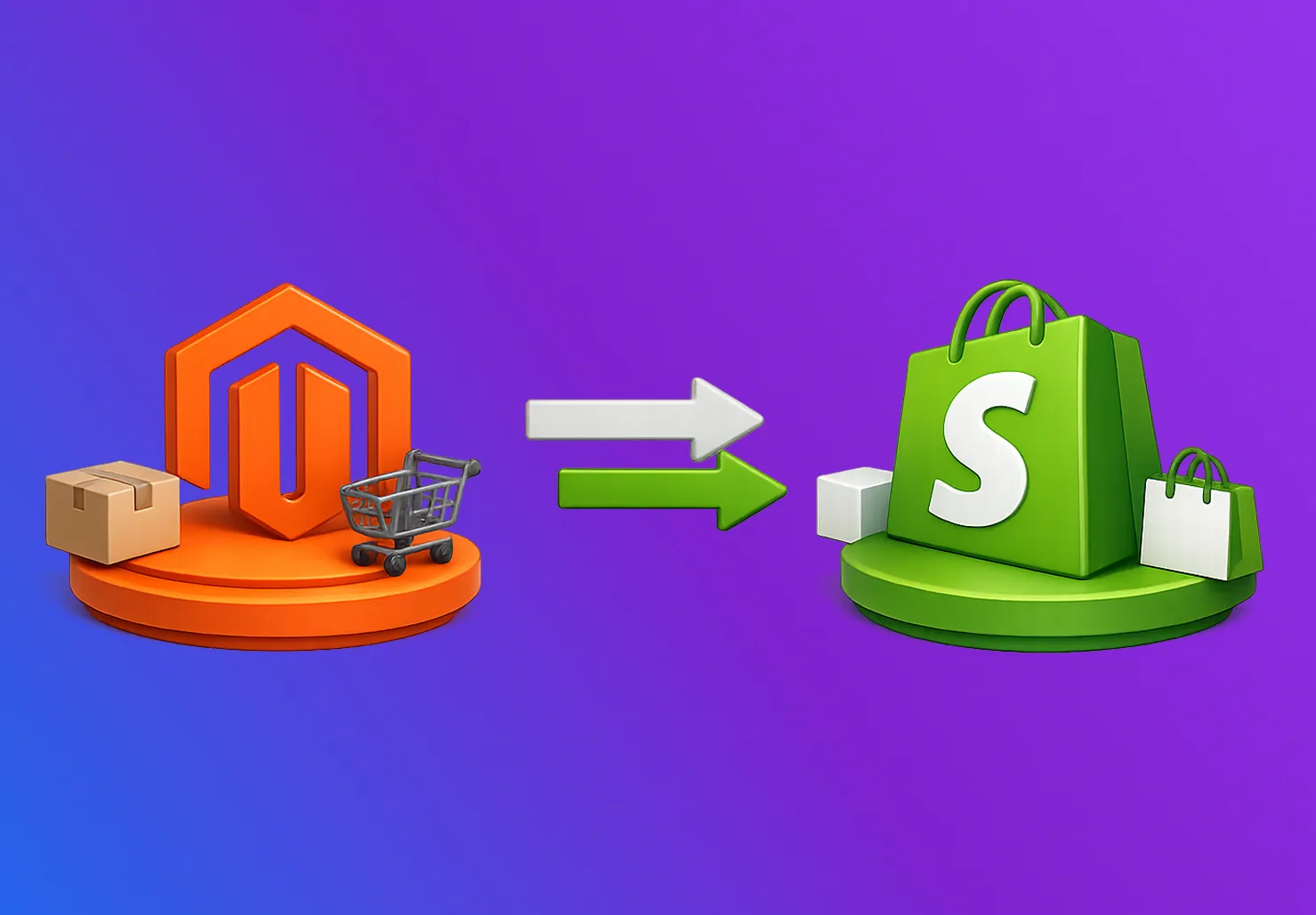
If you’ve been running your e-commerce store on Magento for a while, you already know the drill. The platform is powerful, no doubt about it. But it’s also the kind of powerful that requires a dedicated developer, a decent server budget, and a whole lot of patience just to keep things running. A routine update that should take a day somehow turns into a two-week sprint. Your hosting bill keeps climbing. And every time you want to make a small design tweak, someone’s quoting you a mini-project. A lot of store owners reach this exact breaking point, and that’s exactly when Magento to Shopify migration starts to look very appealing. Shopify has evolved into something genuinely remarkable for e-commerce businesses of all sizes. Brands like Gymshark, Tesla Motors, and Red Bull run on it. It’s fast, fully hosted, and doesn’t require a developer just to update a banner. But here’s the thing, migrating platforms isn’t something you do over a weekend with a cup of coffee. Done wrong, it can tank your SEO rankings, scatter your customer data, and leave your storefront looking like it was put together in a hurry. Done right, it sets you up for smoother operations, better conversions, and a platform that actually grows with you. In this guide, we’re going to walk through everything, the what, the why, the detailed checklist, the step-by-step process, and the services worth considering when you’re ready to make the move. What Is Magento & Shopify? Magento is a powerful open-source ecommerce platform known for its deep customization capabilities. It gives businesses complete control over their store architecture, database structure, and functionality. Large enterprises appreciate Magento for its scalability and flexibility. However, that flexibility comes with responsibility. Hosting, maintenance, security updates, and performance optimization require technical expertise. We’ve seen brands thrive on Magento when they had in-house development teams. Complex catalogs, custom pricing rules, and intricate B2B workflows are where Magento shines. But when the business model shifts toward agility and speed, the overhead can feel heavy. Shopify, on the other hand, is a hosted SaaS ecommerce platform designed for simplicity and scalability. It handles hosting, security, updates, and performance infrastructure. The focus shifts from technical maintenance to growth and marketing. During a recent migration project for a sustainable food brand, we noticed something interesting. On Magento, their team spent more time coordinating with developers. After moving to Shopify, their internal focus shifted toward campaigns, partnerships, and product expansion. Magento gives control. Shopify gives momentum. Understanding this difference is the foundation of any step by step guide Magento to Shopify migration process. Why Migrate from Magento to Shopify? Let’s be honest here, no one migrates platforms just for fun. It’s a significant investment of time, money, and organizational energy. So the reasons need to be compelling enough to justify the disruption. And for most businesses we’ve worked with, they absolutely are. 1. Reduced Technical Overhead Magento requires dedicated hosting, server management, security patches, and ongoing development. Shopify removes those layers. For brands that want predictable operational costs, this matters. One client in the EdTech space reduced technical support expenses significantly after migrating. Their leadership team could finally allocate budget toward digital marketing rather than server maintenance. 2. Faster Time to Market Launching a new feature in Magento often involves development cycles. Shopify’s ecosystem of apps simplifies implementation. We’ve launched promotional campaigns in days on Shopify that would have taken weeks on Magento. Speed compounds growth. 3. Improved Performance & Hosting Stability Shopify’s infrastructure is optimized for ecommerce performance. Site speed directly impacts conversion rate and SEO rankings. When discussing Magento to Shopify migration cost with clients, we emphasize hidden performance costs. Slow pages don’t just frustrate users; they affect revenue. 4. Simplified User Experience Shopify’s admin dashboard is intuitive. Teams can manage products, orders, and discounts without technical knowledge. For growing brands, internal efficiency is underrated. Reduced dependency on developers improves operational flow. 5. App Ecosystem & Integrations Shopify integrates seamlessly with marketing tools, analytics platforms, and payment gateways. While Magento supports integrations, implementation is often more complex. 6. Predictable Cost Structure Magento involves hosting fees, development retainers, and maintenance expenses. Shopify offers subscription-based pricing. When evaluating Magento to Shopify migration cost, brands often realize long-term operational predictability outweighs migration investment. 7. Focus on Growth The biggest shift we observe post-migration is mindset. Teams stop worrying about backend maintenance and start focusing on customer acquisition, UX refinement, and CRO optimization. That’s the real advantage. Step-by-Step Guide: Magento to Shopify Migration This is the practical engine of the whole process. A step by step guide to Magento to Shopify migration needs to be both technically clear and strategically sound. Here’s how to execute it properly. Step 1: Back Up Your Magento Store Repeat: back up everything first. Log in to your Magento Admin Panel, go to System > Tools > Backups, and run a complete database backup. Download the backup files and store them in at least two secure locations. This step takes thirty minutes and can save you weeks of recovery work if anything goes wrong downstream. Don’t skip it. Don’t rush it. Step 2: Set Up Your Shopify Store Head to Shopify.com and start your free trial. You don’t need to be on a paid plan to begin setting things up, Shopify gives you time to configure your store before you go live. Enter your store name, connect your custom domain (you’ll point it to Shopify later, closer to launch day), and work through the initial setup checklist in the Shopify admin. Configure your payment gateways, tax settings, and shipping zones. These operational settings need to be in place before products and orders arrive, your store will be technically live but commercially broken. Step 3: Choose Your Migration Method There are three broad approaches, and the right choice depends on your store’s complexity, your team’s technical capacity, and your budget. The first is manual migration via CSV files. This involves exporting your Magento data as CSV files (via
15 Best Single Product Shopify Theme [2026]

Here’s something we’ve learned launching dozens of successful single-product Shopify theme stores: when you’re selling one thing, every pixel either helps or hurts. There’s nowhere to hide weak messaging, no catalog to browse when your value proposition doesn’t land immediately, no other products to distract from poor photography. That single product Shopify theme you choose becomes your entire customer experience, and it better convert like crazy. What Is a Single Product Shopify Theme? A single-product Shopify theme is essentially a high-converting landing page built into Shopify’s ecommerce framework, designed specifically for businesses selling one core product with perhaps a few variants or complementary add-ons. Think of it as direct response marketing meeting ecommerce functionality, all the persuasion techniques of conversion-focused landing pages combined with seamless purchasing capability. These themes strip away typical e-commerce architecture that creates unnecessary complexity when you’re only selling one thing. No extensive navigation menus. No collection pages organizing products by category. No search functionality, hunting through catalogs. Instead, you get laser-focused layouts that tell one compelling story from the hero section through features, benefits, social proof, objection handling, and ultimately to a conversion point visitors can’t miss. What makes a one-product Shopify theme genuinely different from just using a regular theme and hiding everything except one product? Purpose-built conversion optimization. The Shopify single product store theme approach understands landing page psychology, how to structure information progressively so visitors get exactly what they need at each decision stage. Where to place trust signals for maximum impact, how to handle objections at precisely the moment they arise in the visitor’s mind, and how to create urgency that motivates action without feeling manipulative or desperate. The best implementations also recognize that selling one product often means explaining it thoroughly. These themes provide extensive room for detailed descriptions, multiple image angles showing products from every perspective, video integration that demonstrates usage, specification tables comparing variants, and comprehensive. FAQ sections that pre-answer every possible question, all organized so visitors naturally flow through information rather than feeling overwhelmed by walls of text. Top 15 Single Product Shopify Themes 1. Launch Launch lives up to its name as the ultimate Shopify theme for product launch scenarios. The theme’s structure mirrors successful Kickstarter campaigns and product launch pages, guiding visitors through a narrative arc that builds excitement and anticipation. We’ve used Launch for nutrition products where the story behind formulation and ingredient sourcing mattered as much as the product itself. The theme’s countdown timer functionality creates genuine urgency for limited releases, while its email capture integration builds pre-launch lists effectively. What makes Launch particularly valuable is how it handles variant selection, keeping focus on the core product while allowing size, color, or bundle variations without fragmenting attention. 2. Palo Alto Palo Alto brings a sophisticated, editorial approach perfect for premium single products where brand story drives purchase decisions. The theme’s typography-focused design and generous whitespace create the feeling of browsing a luxury magazine rather than shopping a typical e-commerce store. Fashion accessories, artisan goods, and high-design products benefit from Palo Alto’s refined aesthetic that suggests exclusivity and craftsmanship. The theme includes sophisticated product image galleries that let photography tell stories visually, reducing reliance on text while maintaining conversion effectiveness through strategic placement of trust signals and calls-to-action. 3. Responsive Don’t let the generic name fool you, Responsive is a powerhouse Shopify one-product website template that prioritizes mobile experience above everything else. Given that mobile traffic dominates most product categories, this focus matters enormously. The theme’s mobile-first design ensures every element renders perfectly on phones, with large tap targets, streamlined forms, and checkout flows optimized for one-handed phone operation. We’ve seen conversion rate differences of 40-50% between desktop and mobile on poorly optimized themes, but Responsive maintains consistent performance across devices. 4. Startup Startup targets exactly what its name suggests, new brands launching their first product with limited budgets but serious conversion goals. The theme provides essential functionality without overwhelming new merchants with complexity they don’t need yet. Its straightforward setup means you can launch quickly, while its clean design prevents the “obviously using a budget theme” appearance that undermines premium positioning. For founders testing product-market fit before investing heavily in custom Shopify development, Startup provides a professional foundation that converts adequately while you validate demand. 5. Focal Focal understands that for many single products, visual storytelling drives conversion more than text ever could. The theme’s image-first design philosophy puts photography and video at the absolute center of the experience, with minimal text overlay and generous space for visual content. Lifestyle products, fashion items, and anything where seeing the product in context matters benefit from Focal’s approach. The theme handles high-resolution images efficiently without destroying page speed, using lazy loading and optimization techniques that maintain visual quality while keeping load times acceptable. 6. Brooklyn Brooklyn has evolved from a simple theme into a sophisticated minimal Shopify theme for single product stores that balances aesthetic minimalism with conversion functionality. The theme’s clean lines and restrained design language work beautifully for modern, design-conscious brands that want their product to speak for itself without visual competition from busy layouts. We’ve implemented Brooklyn for wellness products where the brand positioning emphasized purity and simplicity, the theme’s design reinforced those brand values while maintaining all necessary conversion elements. 7. Simple Simple does exactly what it promises, strips away everything unnecessary to focus purely on product and purchase. This radical simplification works remarkably well for straightforward products where complicated explanations aren’t needed and the value proposition is immediately clear. The theme’s no-nonsense approach reduces decision friction by eliminating every possible distraction between arrival and purchase. For replenishment products, upgrades to existing solutions, or anything where customers arrive with purchase intent already established, Simple’s streamlined approach converts efficiently. 8. Narrative Narrative excels at exactly what its name suggests, telling product stories that connect emotionally before asking for the sale. The theme’s structure naturally guides visitors through origin stories, founder journeys, mission statements, and the “why” behind products before transitioning into features
E-commerce Trends You Need to Know in 2026
Ecommerce has always been dynamic, but 2026 is shaping up to be a pivotal year. Ecommerce trends 2026 are no longer just about selling online, they’re about creating experiences, building trust, and integrating every part of the digital journey seamlessly. We’ve been watching the industry evolve for years, seeing how businesses adapt from ecommerce trends 2019 to now. Some changes are subtle, like smarter packaging, while others completely redefine how customers engage with brands. We’ve worked with clients across industries, from sustainable fashion brands to health and fitness startups, helping them anticipate what’s coming next. And one thing is clear: the businesses that thrive in 2026 won’t just follow trends, they’ll anticipate them, blend creativity with technology, and make the shopping journey unforgettable. The Evolution of Ecommerce: From 2019 to 2026 Looking back, the journey from ecommerce trends 2019 to today is fascinating. In 2019, ecommerce was largely about convenience and basic digital storefronts. The focus was on functional websites, standard product pages, and simple checkout flows. Fast forward to 2026, and the game has completely changed. Now, every touchpoint matters. Customers expect personalized experiences, intuitive navigation, and immediate gratification. They want brands to understand their needs, provide solutions quickly, and make shopping delightful at every step. We’ve seen this in action with one of our clients in the sustainable fashion sector. Initially, their website followed generic templates, but once we implemented a design that highlighted their brand story, offered seamless product discovery, and integrated shopify marketing strategy tools, their engagement skyrocketed. Another major evolution is in data utilization. Ecommerce businesses today analyze user behavior to predict needs, suggest relevant products, and optimize conversion paths. B2B ecommerce trends 2020 showed the early stages of personalization, but now, predictive AI-driven recommendations are mainstream. We help clients integrate analytics seamlessly so that every click, scroll, and purchase informs the next move. In short, the ecommerce landscape has shifted from transactional to experiential, from reactive to proactive. 2026 is about businesses anticipating what customers want, often before they even realize it themselves. Experience-First Ecommerce Is No Longer Optional If there’s one thing that stands out in ecommerce trends 2026, it’s the emphasis on experience. Customers are no longer satisfied with simple online stores, they demand immersive, intuitive, and engaging shopping experiences. Experience-first ecommerce combines user interface, storytelling, product presentation, and even post-purchase engagement into one seamless journey. One client, a nutrition and diet brand, wanted more than just a functional site, they wanted customers to feel inspired from the moment they landed. By integrating dynamic product displays, interactive quizzes, and personalized recommendations, we not only increased conversions but also built long-term loyalty. Experience-first ecommerce also touches mobile responsiveness, speed, and accessibility. With over 60% of ecommerce purchases now happening on mobile, even a minor lag or confusing navigation can cost sales. Our team ensures every design decision, from checkout flows to pop-ups, is intentional, keeping engagement and conversion at the forefront. Marketing also plays a role in experience. From shopify marketing services to branding marketing shopify, the way a customer interacts with emails, ads, and social content contributes to their overall perception. A seamless, consistent experience across platforms strengthens trust and encourages repeat business. In essence, 2026 isn’t just about products; it’s about crafting moments. Each click, scroll, and interaction is an opportunity to leave a lasting impression. Businesses embracing this trend early will find themselves ahead of the curve. Ecommerce Web Design Trends Shaping Buying Decisions Web design has gone beyond aesthetics, it’s a strategic tool in ecommerce trends 2026. The right design can guide buying decisions, enhance credibility, and create memorable brand experiences. Modern ecommerce websites emphasize minimalism, interactive elements, and personalization. Dark mode, micro-animations, and dynamic product visuals are not just for looks, they engage users and subtly influence their choices. For one of our clients, a Shopify Plus store specializing in sustainable food, implementing shopify plus ecommerce design agency strategies with immersive visuals increased their average session duration by 42%. Personalized design elements, such as recommendations, user-specific promotions, and adaptive layouts, are becoming mainstream. Even something as simple as altering product placement based on previous behavior can have measurable impacts. Bullet points that summarize design trends today include: Our approach blends strategy and creativity. By leveraging shopify ecommerce solutions and expert UX/UI practices, we ensure websites are not only visually appealing but also conversion-focused. For ecommerce businesses in 2026, design isn’t optional, it’s a key driver of growth. Smarter Ecommerce Packaging Trends That Build Brand Loyalty Packaging has evolved from simple protection to a powerful marketing tool. Ecommerce packaging trends in 2026 focus on sustainability, personalization, and creating “unboxing experiences” that delight customers. Brands are moving towards eco-friendly materials, custom inserts, and aesthetically pleasing designs that customers want to share on social media. For instance, a client in sustainable fashion saw a 27% increase in social shares after we implemented signature packaging with reusable materials and personalized messages. Packaging now also reinforces brand identity. Colors, textures, and design elements all communicate the brand story. Combined with subscription-based services or promotional inserts, packaging becomes a touchpoint for engagement, encouraging repeat purchases. Incorporating shopify marketing partners into packaging campaigns, like QR codes linking to curated content or loyalty programs, can also elevate customer interaction. Packaging is no longer just functional; it’s a silent salesperson that works 24/7 to build trust, delight, and brand loyalty. Smarter packaging, paired with a seamless online experience, ensures that the entire journey from click to delivery strengthens customer relationships and turns buyers into advocates. Ecommerce Fraud Trends and the Rising Importance of Trust Ecommerce fraud trends continue to evolve, making trust a non-negotiable component of online business. In 2026, customers are acutely aware of cybersecurity, privacy, and authenticity. Fraud prevention is not just a back-end concern, it’s part of the user experience. Payment security, two-factor authentication, and transparent policies are essential. Customers abandon carts instantly if something feels suspicious. One health and nutrition client had recurring abandoned carts until we integrated advanced fraud detection tools