

SEO on Shopify is a funny game. On one hand, Shopify is incredibly SEO-friendly out of the box.
Clean URLs, fast hosting, mobile responsiveness, the basics are already covered. On the other hand, ranking a competitive Shopify store without the right shopify seo tools feels like trying to win a marathon in flip-flops.
We’ve worked with ecommerce brands that thought SEO meant “install an app and wait.” Months later, traffic stayed flat, conversions didn’t move, and frustration kicked in.
The turning point usually came when SEO stopped being treated like a plugin and started being treated like a system.
That system almost always includes the right seo tools Shopify stores actually benefit from, not just the most popular ones.
What Are Shopify SEO Tools?
Shopify SEO tools are platforms, apps, and software that help you understand how your store is performing in search engines and what’s stopping it from performing better.
They typically help with:
- Keyword research and mapping
- On-page optimization (titles, meta descriptions, content)
- Technical SEO issues like broken links or crawl errors
- Site speed and performance
- Content optimization and internal linking
- Tracking rankings and organic growth
But here’s the part people don’t talk about enough: tools don’t “do SEO.” They reveal leverage points.
One of our Shopify clients in sustainable fashion had strong products and ethical branding but couldn’t rank beyond page two.
The tools showed us something surprising, the issue wasn’t keywords or backlinks. It was duplicate content caused by product variants and collections. Without SEO tools, that insight would’ve taken weeks to uncover manually.
7 Best Shopify SEO Tools to Sell 10x
Let’s discuss the tools that actually move the needle for Shopify stores, ranked not by how impressive their features sound in marketing materials, but by how effectively they help real stores get found and make sales.
This isn’t an exhaustive list of every SEO tool that works with Shopify, it’s the ones we’ve seen deliver consistent results when implemented strategically.
Plug in SEO
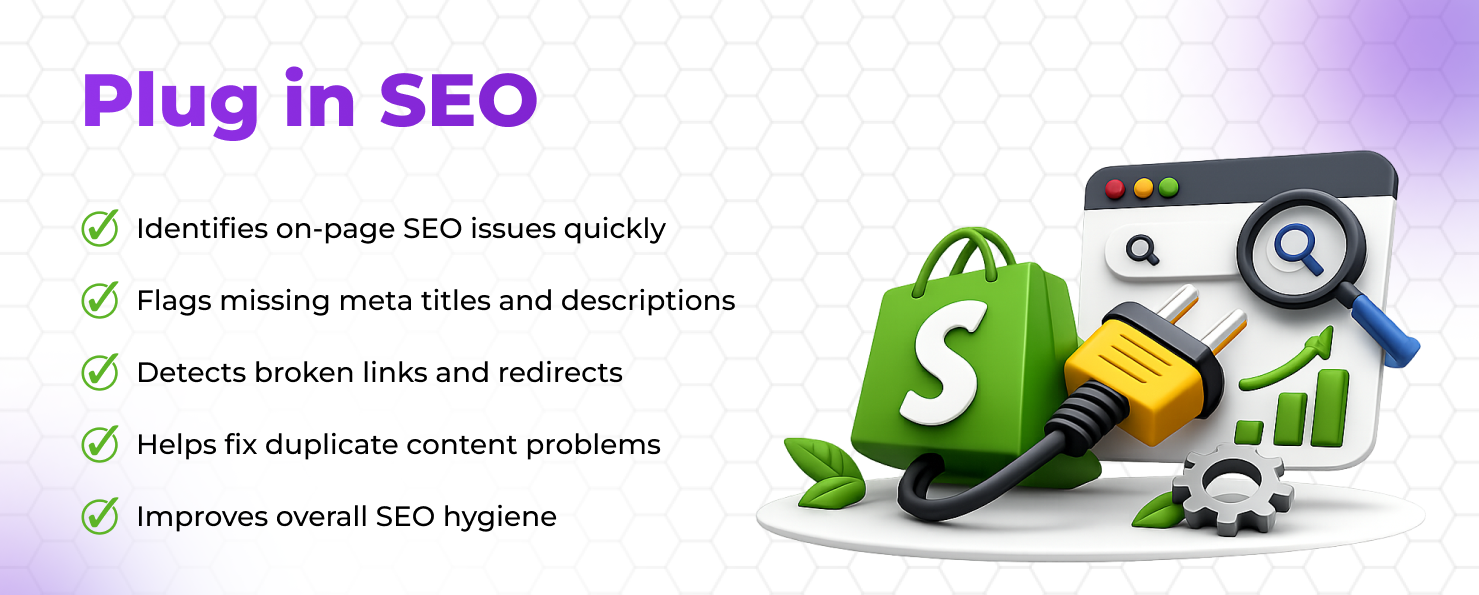
Plug in SEO has earned its position as one of the most popular Shopify SEO tools for one simple reason: it makes complex SEO accessible to people who don’t eat, sleep, and breathe search optimization.
The app scans your store continuously, identifies issues affecting your rankings, and explains problems in language that doesn’t require an SEO dictionary to understand.
When it finds a broken link, it doesn’t just report “404 error detected”, it shows you exactly which page has the problem and why it matters for SEO.
What makes Plug in SEO particularly valuable is its prioritization system. Most SEO tools overwhelm you with hundreds of potential issues, leaving you paralyzed about where to start.
Plug in SEO categorizes problems by severity, helping you focus on fixes that will actually impact rankings rather than getting lost in minor technical details that don’t matter much.
We’ve used this with clients who felt completely overwhelmed by SEO, and the clarity it provides transforms paralysis into action.
The free version handles basic auditing well enough for new stores or those just starting with SEO. It checks for common issues like missing meta descriptions, broken links, and slow-loading pages.
The paid version includes continuous monitoring, in-depth technical audits, and more advanced optimization suggestions. For most Shopify stores, the paid version typically justifies its cost within the first month by identifying issues that would otherwise harm rankings and sales.
SEO Manager
SEO Manager takes a different approach, functioning more like an SEO education platform that happens to also optimize your store.
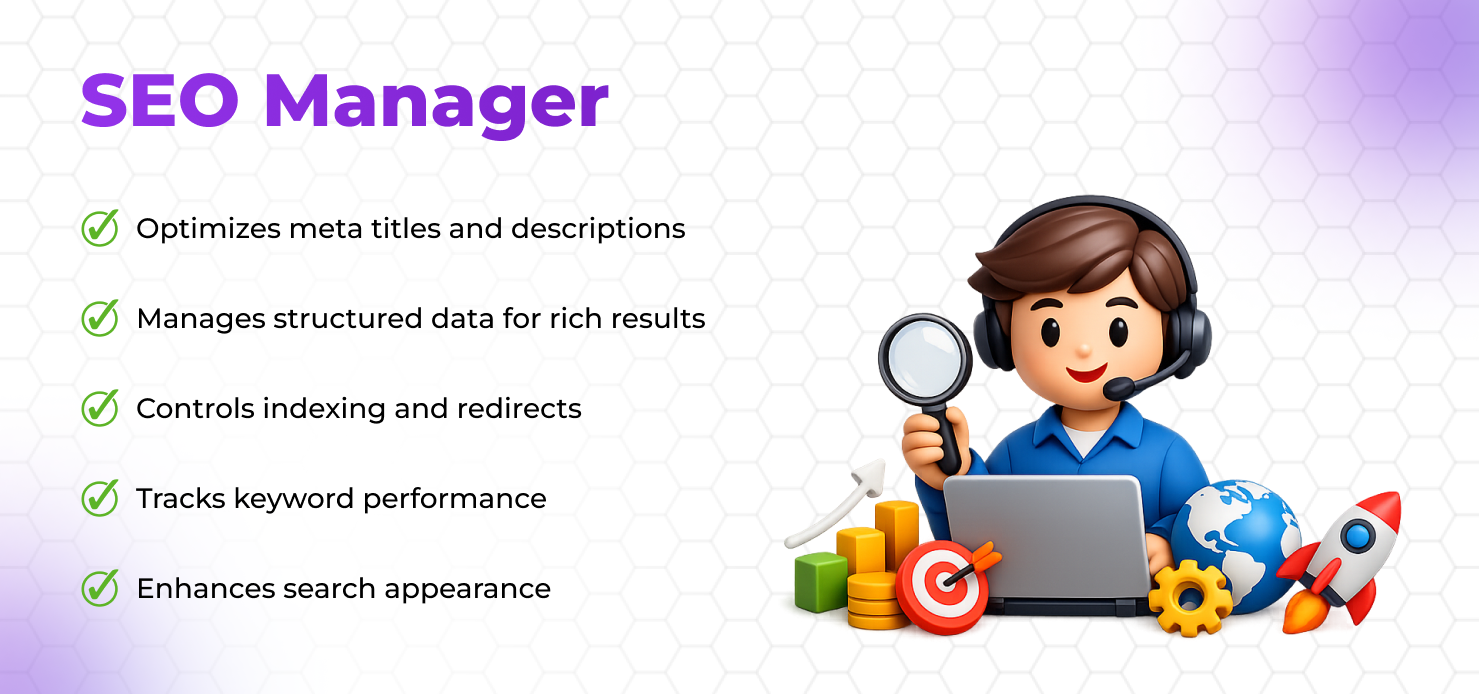
The tool doesn’t just identify problems, it teaches you why they’re problems and how fixing them improves your store’s visibility. This educational angle makes it particularly valuable for store owners who want to understand SEO rather than just follow instructions blindly.
The interface walks you through optimization step by step, explaining each element in plain language.
When you’re optimizing a product page, it shows you what makes a good title tag, why meta descriptions matter, how to structure product descriptions for both humans and search engines, and what image optimization actually means in practice.
This guided approach prevents the common mistake of implementing technical SEO changes without understanding their purpose.
Where SEO Manager really shines is in its content optimization features. It analyzes your product descriptions, collection pages, and blog content, suggesting improvements based on what actually ranks well in your specific niche.
We’ve watched store owners use these suggestions to transform generic product descriptions into compelling, SEO-friendly content that both ranks well and converts visitors into buyers.
The tool essentially gives you an SEO consultant’s perspective without the consulting fees.
Smart SEO
Smart SEO focuses on automation, handling repetitive SEO tasks that are important but tedious to do manually.
It automatically generates meta tags, creates JSON-LD structured data, optimizes images at scale, and handles other technical elements that improve search visibility but consume enormous amounts of time when done by hand.
For stores with hundreds or thousands of products, this automation is the difference between having SEO and just wishing you had time for it.
The structured data functionality deserves special mention because it’s one of those invisible SEO elements that significantly impacts how your products appear in search results.
Structured data tells search engines specific information about your products, price, availability, ratings, and specifications, enabling rich results that stand out visually and drive higher click-through rates.
Smart SEO implements this automatically, which is valuable because doing it manually requires technical knowledge most store owners don’t have.
The image optimization feature compresses files without noticeable quality loss, a critical function because large images are often the primary reason Shopify stores load slowly.
Site speed directly impacts rankings and conversion rates, customers won’t wait for slow pages to load, and Google knows this.
Automating image optimization ensures every product photo contributes to good performance rather than dragging it down.
Yoast SEO
Yoast brings its WordPress pedigree to Shopify, and while it’s not quite as comprehensive in the Shopify environment, it remains a solid choice, particularly for stores with significant content marketing components.
If you’re running a blog alongside your store, which you should be if you want to rank for informational searches that eventually convert to sales, Yoast excels at optimizing blog content.
The content analysis feature evaluates your writing in real-time, suggesting improvements to readability, keyword usage, sentence structure, and overall SEO quality.

It’s like having an editor who understands both good writing and search optimization reviewing your work before you publish.
This immediate feedback prevents the common problem of publishing content that’s either over-optimized and robotic or beautifully written but invisible to search engines.
Yoast’s snippet preview shows exactly how your content will appear in search results, allowing you to refine titles and descriptions for maximum click-through appeal before publishing.
This preview function matters more than it seems because the difference between ranking fifth and getting clicks versus ranking fifth and being ignored often comes down to how compelling your search result looks compared to competitors.
SEMrush
SEMrush sits at the premium end of SEO tools, offering capabilities that go far beyond basic Shopify optimization into comprehensive competitive intelligence, keyword research, and digital marketing analytics.
The price point puts it out of reach for many new stores, but for established shops serious about dominating their niche, SEMrush provides insights that cheaper tools simply can’t match.
The competitive analysis features reveal exactly what keywords competitors rank for, which pages drive their traffic, how they structure their content, and where gaps exist that you could exploit.
We’ve used SEMrush to analyze successful stores in clients’ niches, identifying keyword opportunities they were completely missing and content strategies their competitors were using effectively.
This intelligence transforms SEO from guesswork into strategic planning based on actual data about what works in your specific market.
The keyword research capabilities go deep, showing not just search volumes but also keyword difficulty, related terms, question-based searches, and trending topics in your niche.
This depth enables sophisticated content strategies that target keywords at various stages of the buyer’s journey, including informational searches that build awareness, comparison searches that influence consideration, and transactional searches that drive immediate sales.
Ahrefs
Ahrefs competes directly with SEMrush in the premium tool category, and choosing between them often comes down to personal preference and specific feature priorities.
Ahrefs particularly excels at backlink analysis, showing who links to your store, who links to competitors, and opportunities to acquire high-quality backlinks that boost domain authority and rankings.
The content gap analysis feature identifies keywords that competitors rank for but you don’t, revealing opportunities to create content that captures traffic they’re getting that you’re missing.

We’ve used this feature to develop content strategies for stores entering competitive niches, helping them identify underserved keywords and topics where they could realistically compete despite having less domain authority than established competitors.
Ahrefs’ rank tracking shows exactly how your positions change over time for target keywords, providing clear evidence of whether your SEO efforts are working.
This tracking function keeps you honest about results, it’s easy to believe you’re ranking better because you’re working hard, but actual ranking data reveals truth.
We’ve seen this data prevent stores from continuing strategies that weren’t working and double down on approaches that were delivering results.
Google Search Console
Google Search Console deserves mention as the one truly essential free tool that every Shopify store absolutely must use. I
It’s not the most user-friendly interface, and it doesn’t offer the comprehensive features of paid tools, but it provides information directly from Google about how they view your store.
Which searches bring people to your site, which pages are performing well, and what technical issues might be affecting your rankings?
The search performance report shows exactly which queries bring visitors to your store, how often your pages appear in search results, what percentage of people actually click through, and what your average position is for each query.
This data is gold for understanding what’s working and what opportunities exist.
We’ve discovered highly profitable keywords clients had no idea they were ranking for just by analyzing Search Console data, then optimized content around those keywords to improve rankings further and capture more traffic.
The coverage report identifies technical issues preventing Google from properly indexing your pages, broken links, crawl errors, mobile usability problems, and security issues.
These technical problems can completely tank your rankings, and Search Console is often the first place they become visible.
Fixing issues flagged in Search Console has immediately improved rankings for stores that were being penalized for technical problems they didn’t even know existed.
The Meta Future’s Approach
Look, we could sit here listing tools forever, but here’s what actually matters based on implementing SEO for stores across wellness, sustainability, coaching, and education niches: the best tool is the one that fits your current situation and you’ll actually use consistently.
A new store with five products doesn’t need SEMrush’s enterprise capabilities. An established store with thousands of products can’t rely on manual optimization alone.
We typically recommend starting with Google Search Console (because it’s free and essential) plus one comprehensive app like Plug in SEO or SEO Manager that handles technical audits and basic optimization.
As stores grow and budgets allow, adding specialized tools for competitive research, advanced keyword analysis, or automated technical optimization makes sense.
The key is building tool stacks strategically based on actual needs rather than accumulating impressive-sounding tools you never fully utilize.
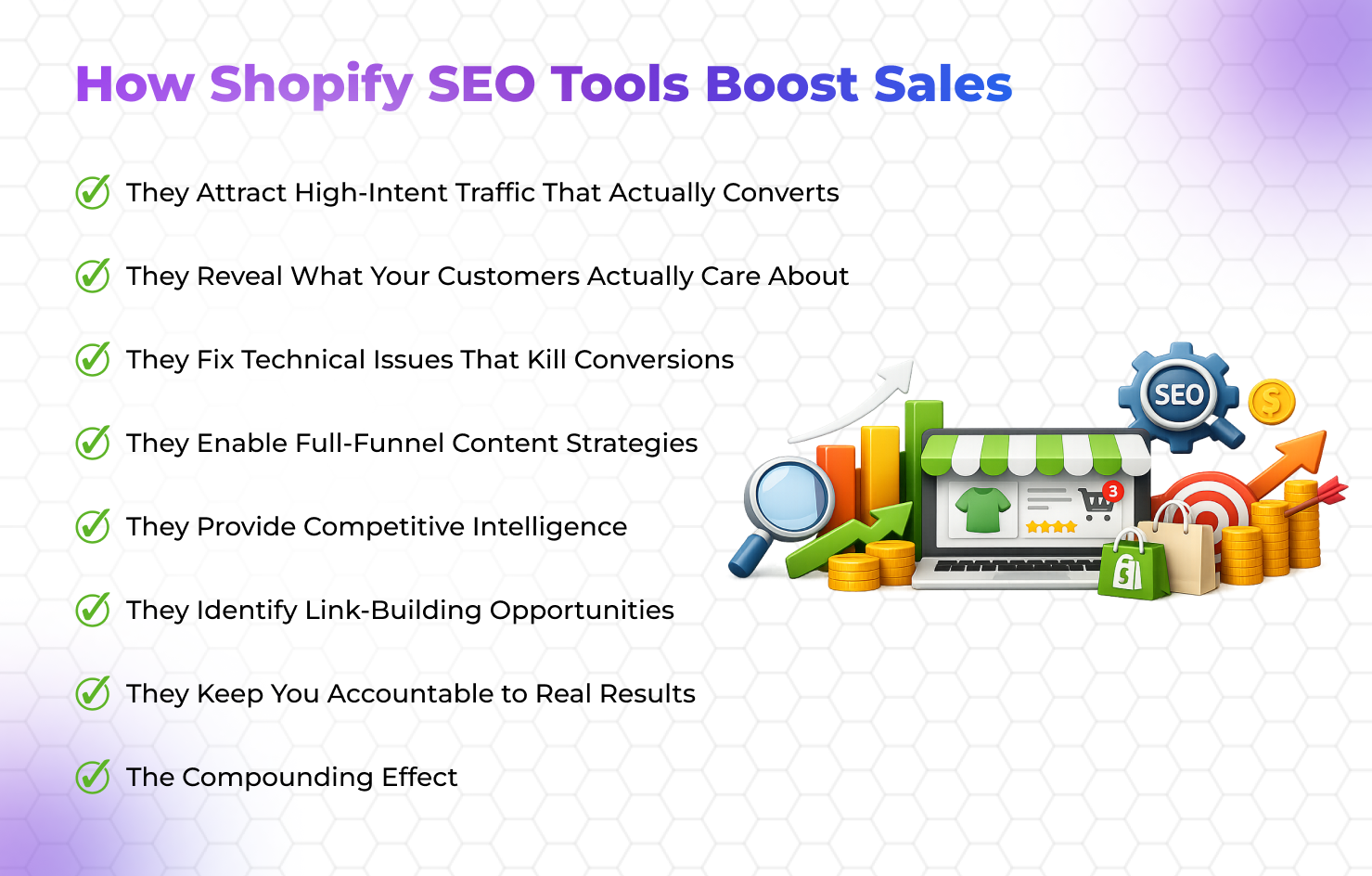
How Shopify SEO Tools Boost Sales
Let’s connect the dots between using seo tools shopify and actually making more money, because that’s what actually matters. Rankings are great. Traffic is exciting. But sales are what keep your business alive.
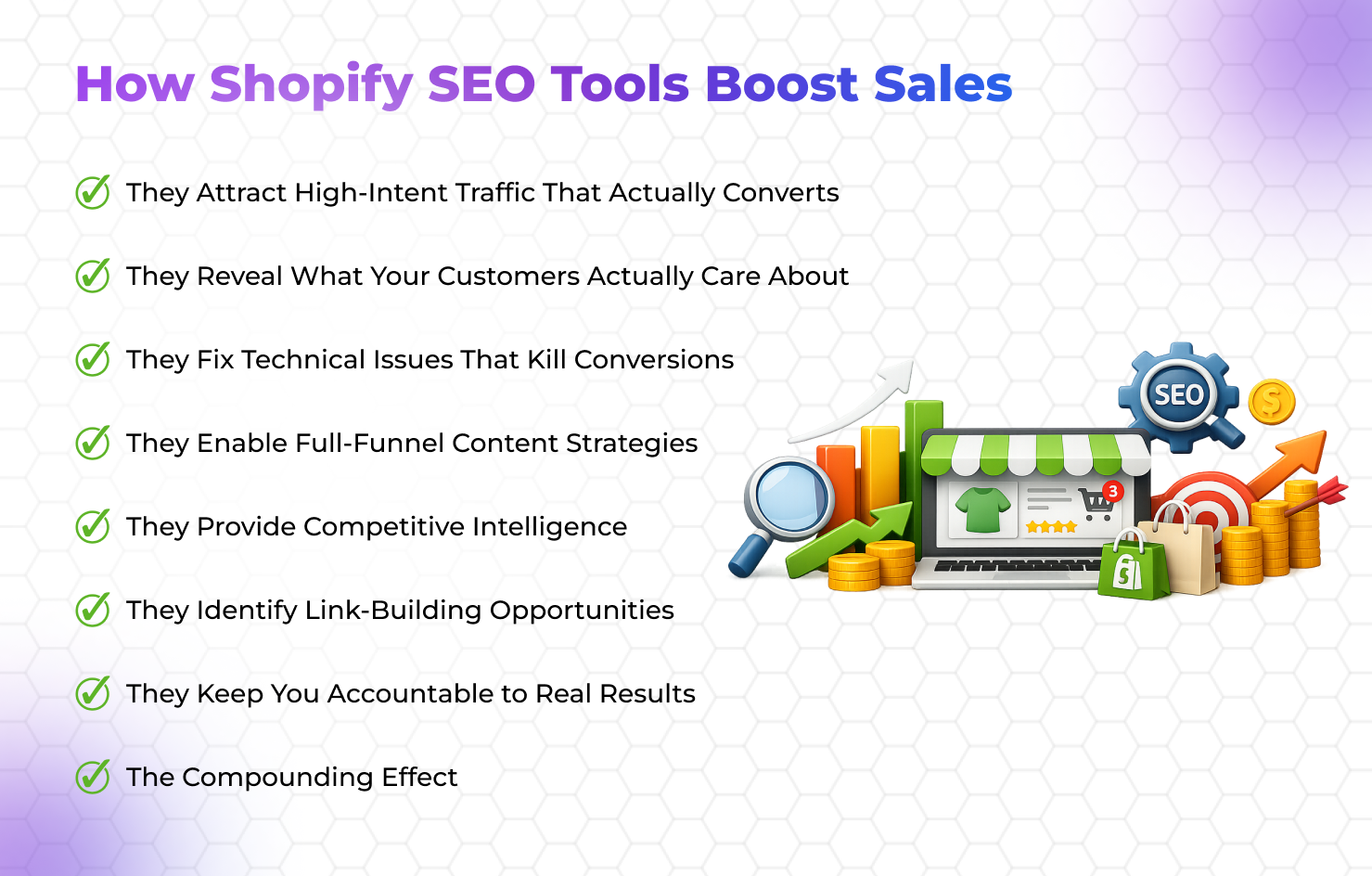
Here’s how SEO tools translate into revenue growth through multiple connected pathways that compound over time.
1. They Attract High-Intent Traffic That Actually Converts
Shopify SEO tools help you get found by people actively searching for what you sell, high-intent traffic that converts at significantly higher rates than cold traffic from ads or social media.
Someone searching “organic cotton t-shirts sustainable brands” is demonstrating clear purchase intent.
They know what they want, they’re comparing options, and they’re ready to buy from whoever best meets their criteria.
2. They Reveal What Your Customers Actually Care About
SEO tools reveal what product attributes, benefits, and use cases your customers actually care about based on how they search.
This insight transforms product descriptions from generic feature lists into compelling content that addresses real customer questions and concerns.
3. They Fix Technical Issues That Kill Conversions
Technical SEO improvements enabled by these tools directly impact conversion rates beyond just attracting traffic. These technical wins boost sales from existing traffic before you even increase visitor numbers.
4. They Enable Full-Funnel Content Strategies
SEO tools help you build content strategies that attract customers at different stages of the buying journey, nurturing them from awareness through consideration to purchase.
5. They Provide Competitive Intelligence
The competitive intelligence features in premium SEO tools reveal what successful competitors do differently, allowing you to adopt proven strategies rather than guessing.
6. They Identify Link-Building Opportunities
Backlink analysis tools help you identify link-building opportunities that boost domain authority and rankings.
Building a strong backlink profile is one of the few SEO elements that requires sustained effort over time, but tools make identifying opportunities systematic rather than random.
7. They Keep You Accountable to Real Results
Rank tracking keeps you accountable to results and helps you identify what’s working before investing more time and resources.
8. The Compounding Effect
Here’s the revenue multiplication effect that makes SEO tools investment-worthy: unlike paid advertising, where results stop when spending stops, SEO improvements compound over time.
The optimization work done today continues to deliver traffic and sales months and years later.
Where The Meta Future Fits In
SEO tools don’t magically grow Shopify stores. They reveal truths, sometimes uncomfortable ones, about what’s working and what isn’t.
From our experience, the brands that win with SEO aren’t the ones using every tool. They’re the ones using the right tools, paired with a sharp strategy, clean UX, and content that actually speaks to humans.
At The Meta Future, SEO tools are part of our daily workflow, but never the hero of the story. The real hero is how everything connects: design, development, content, and SEO, moving in the same direction.
If your Shopify store feels like it’s doing “everything right” but still not seeing organic growth, it’s usually not effort that’s missing, it’s clarity. And clarity is exactly what the right shopify seo tools are meant to deliver.