

Last month, a sustainable fashion brand owner sat across from us, visibly frustrated. She’d spent thousands on Instagram ads, and while the likes were rolling in, her bank account told a different story.
Her beautiful Shopify store was getting traffic, but sales were disappointing. Then she asked the question that changed everything: “Why do my competitors show up on Google and I don’t?”
That conversation led us down a rabbit hole that revealed a harsh truth: her store was essentially invisible to the 68% of online shoppers who start their product searches on Google.
She’d built a gorgeous store, invested in paid ads, and created amazing products – but she’d completely ignored SEO for ecommerce companies.
Six months later, after implementing the strategies we’re about to share, her organic traffic increased by 340%, and here’s the kicker – those visitors converted at nearly double the rate of her paid traffic.
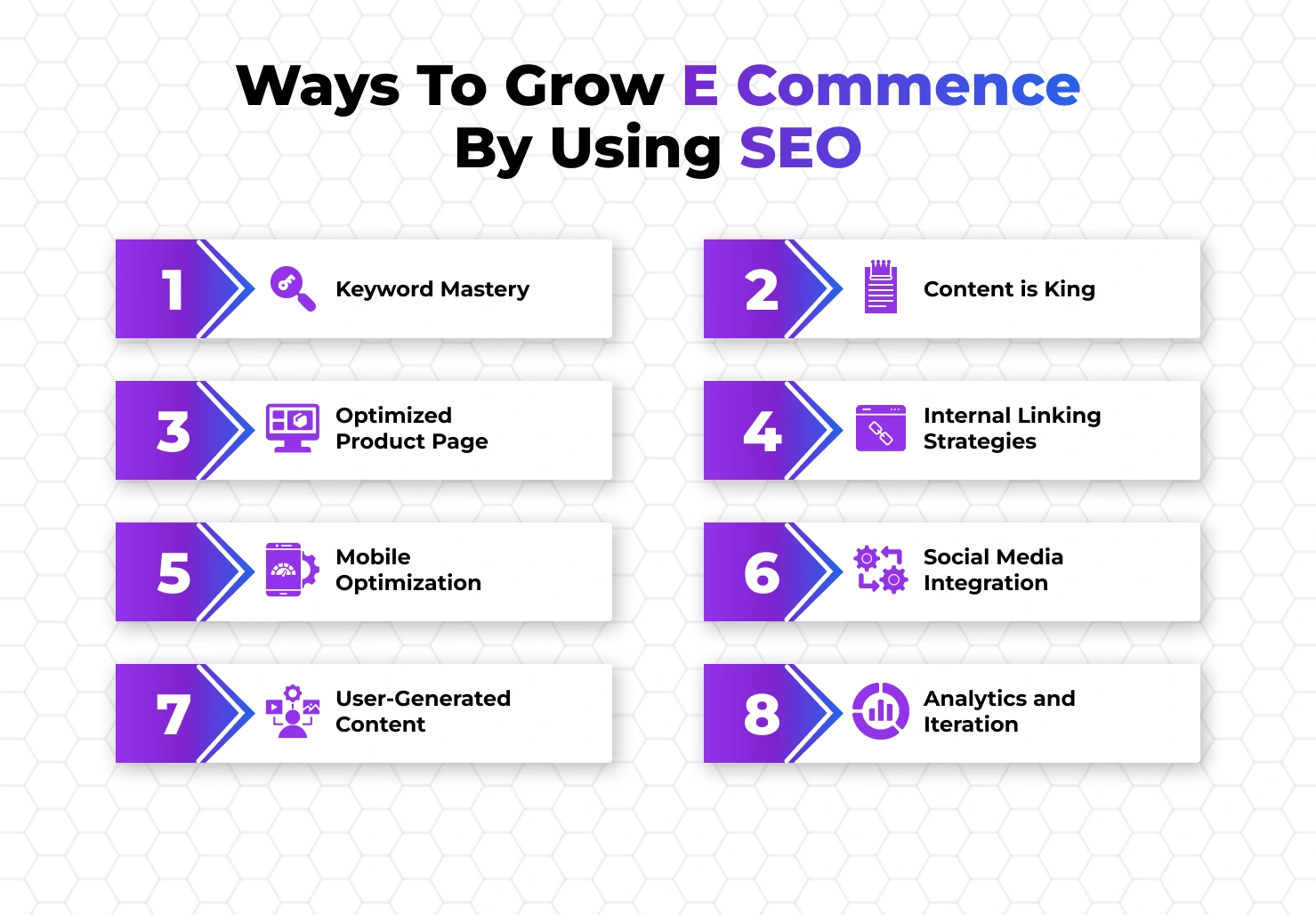
This comprehensive guide breaks down everything you need to know about SEO for ecommerce companies, from optimizing individual product pages to choosing the right agency partner.
These aren’t theories from textbooks – these are battle-tested strategies we’ve implemented for Dubai-based eCommerce businesses that are now dominating their niches organically.
What is SEO for Ecommerce Companies?
When we talk about SEO for ecommerce companies, we’re not just talking about keywords or backlinks. It’s a holistic strategy that connects your product listings, user experience, and brand story in a way that search engines, and people, can’t ignore.
In simple terms, ecommerce SEO is the process of optimizing your online store so it appears higher in search engine results when potential customers search for the products you sell.
But here’s the catch: ecommerce SEO goes far beyond writing a few meta titles and descriptions. It includes:
- Structuring your website so search engines can easily crawl product pages
- Optimizing every product title, image, and description
- Improving site speed and mobile responsiveness
- Earning backlinks from trusted sites
- Enhancing user experience to keep visitors browsing longer
For example, one of our clients in Dubai’s sustainable fashion sector struggled with low traffic despite having amazing products. The issue? Their product pages weren’t optimized. After restructuring their URLs, adding relevant product keywords, and improving loading speed, they saw a 73% increase in organic traffic within four months.
That’s what SEO for ecommerce companies can do, it bridges the gap between a great product and great visibility.
When done right, SEO becomes your 24/7 salesperson. It brings in visitors, builds credibility, and consistently drives conversions, all without paying a cent for ads.
SEO for Shopify Ecommerce Stores
Shopify deserves its own conversation when we talk about SEO for ecommerce companies. As a Shopify ecommerce development agency, we often see brands assume that SEO is “handled” simply because Shopify is one of the most SEO-friendly platforms out of the box. The reality, however, is far more nuanced.
A strong Shopify marketing strategy goes beyond choosing the right theme or installing a few plugins. Shopify gives you a solid technical foundation, but how you build, structure, and market your store determines whether you rank on page one or get buried under competitors working with an experienced Shopify ecommerce agency.
One of the biggest advantages of Shopify is its clean code structure, fast hosting, and mobile-first design. These elements already check several major Google ranking boxes. But effective marketing strategy Shopify brands follow also accounts for platform-specific challenges, duplicate URLs through collections, limited URL control, and auto-generated pages that can quietly dilute SEO authority if left unmanaged.
We’ve seen this firsthand while working as a Shopify ecommerce specialist for a sustainable food brand running multiple collections for the same products. From a branding perspective, it made sense. From an SEO and branding marketing Shopify standpoint, Google was confused.

The same product existed across multiple URLs, competing against itself. Once we consolidated collections, implemented canonical tags, and restructured internal linking, rankings stabilized and organic sales followed, proving how strategic Shopify ecommerce solutions drive measurable growth.
Shopify SEO also lives at the intersection of design, development, and content. Even the best content marketing for Shopify can fail if the theme ignores page speed, heading hierarchy, or crawl depth. This is why Shopify ecommerce development services must align closely with SEO and conversion goals, especially for growing brands and Shopify Plus stores.
At the same time, content-heavy Shopify stores without smart navigation often struggle because search engines can’t properly understand content relationships. A well-planned marketing platform for Shopify should support discoverability, not complicate it.
Another overlooked factor is Shopify’s reliance on apps. While apps support Shopify app marketing and automation, stacking too many can bloat code, slow pages, and create script conflicts. We’ve audited stores partnered with Shopify marketing agencies and even official Shopify marketing partners that still underperformed simply because load times crossed Google’s tolerance threshold.
That’s why SEO for Shopify ecommerce companies isn’t about hacks or shortcuts. It’s about understanding how Shopify behaves at scale, how collections pass authority, how product pages should be structured, how blogs support transactional keywords, and how Shopify marketing tips translate into long-term visibility.
For enterprise brands, this becomes even more critical. A Shopify Plus ecommerce agency or Shopify Plus ecommerce design agency must think beyond aesthetics and focus on scalable SEO architecture that supports growth, content expansion, and conversion optimization.
When Shopify SEO is done right, supported by the right Shopify marketing services, it creates momentum. Rankings improve steadily, traffic compounds, and conversions rise without constantly feeding ad budgets.
And when it’s done wrong, even great products struggle to get discovered.
This is where ecommerce SEO stops being generic and becomes platform-aware. Shopify doesn’t need more plugins, it needs smarter decisions backed by a strategic Shopify marketing agency that understands growth, visibility, and performance.
Why Should Ecommerce Companies Care About SEO?
Imagine you spend thousands on social ads every month, but the moment you stop, traffic drops. Sound familiar?
That’s exactly why ecommerce companies should care about SEO. It’s the digital gift that keeps on giving.
While paid ads offer instant visibility, SEO builds lasting authority. Once your store ranks, it continues to attract customers organically, month after month. In fact, according to BrightEdge, over 53% of all website traffic comes from organic search.
But the benefits go way beyond traffic:
- SEO builds trust. When people see your store ranking high on Google, it immediately signals credibility. Shoppers trust what Google trusts.
- SEO improves user experience. Optimizing site speed, navigation, and mobile responsiveness makes it easier for users to shop, which leads to higher conversions.
- SEO increases ROI. Unlike ads that vanish with your budget, SEO efforts compound over time. Each product optimized adds long-term value.
- SEO helps you understand your audience. Through keyword research and analytics, you can see exactly what your customers are searching for and tailor content around it.
We once worked with an online coaching platform in the UAE that relied heavily on Meta ads. After shifting focus to SEO, they noticed that not only did their cost per lead drop, but their organic conversions increased by 42%. That’s the beauty of SEO, it’s cost-effective and scalable.
Why ecommerce companies should care about SEO isn’t a question anymore, it’s a necessity. The stores that prioritize SEO today are the ones that dominate tomorrow’s market.
How to Optimize Product Pages for Ecommerce SEO?
Product page optimization is where most eCommerce businesses either win or lose the SEO game. We’ve audited hundreds of online stores, and the pattern is consistent: businesses with meticulously optimized product pages dominate their categories, while those with generic, template-driven pages struggle for visibility regardless of how good their products actually are.
Crafting Product Titles That Balance SEO and User Experience
Your product title walks a tightrope between search engine requirements and human readability. We recently worked with a home goods eCommerce store that had product titles like “Bamboo Cutting Board – CB001.”
Technically accurate but completely useless for SEO. We restructured their titles to include search-relevant attributes: “Large Bamboo Cutting Board with Juice Groove – 45cm Professional Kitchen Board.” Same product, dramatically different search visibility.
The formula we’ve developed through hundreds of optimizations includes brand (when relevant), primary product type, key differentiating attributes, and occasionally size or quantity. But here’s the crucial part: this needs to sound natural when read aloud.
AI systems are becoming increasingly sophisticated at detecting keyword stuffing, and users will bounce immediately from awkwardly written product pages. The sweet spot typically falls between 50-70 characters – long enough to include necessary keywords but short enough to display properly in search results.

Product title testing revealed interesting patterns across different product categories. Fashion items perform better with style descriptors and materials mentioned early. Electronics benefit from model numbers and technical specifications.
Home goods need size and material information prominent. Understanding your specific category’s search patterns requires actual keyword research rather than assumptions about what customers might search for.
Writing Product Descriptions That Convert and Rank
Generic manufacturer descriptions copied across thousands of websites actively harm your SEO. Search engines recognize duplicate content and deprioritize it.
More importantly, these cookie-cutter descriptions do nothing to help customers understand why they should buy from you specifically. We’ve seen eCommerce stores transform their conversion rates by investing in unique, detailed product descriptions that address actual customer questions and concerns.
The structure matters enormously for both human readers and AI comprehension. Start with a concise summary paragraph that answers the fundamental question: what is this product and who is it for? Follow with detailed specifications in a scannable format. Include use cases and benefits in natural language.
Address common questions and concerns. This layered approach serves multiple audiences: the quick scanner, the detailed researcher, and the search engine trying to understand relevance.
One of our sustainable product clients saw remarkable results from incorporating customer language into product descriptions.
Instead of writing “eco-friendly reusable container,” they used phrases customers actually searched for: “plastic-free lunch box,” “zero waste food storage,” “BPA-free meal prep container.” This simple shift of using authentic customer vocabulary rather than marketing jargon increased their product page rankings significantly.
Length matters, but not in the way most people think. The goal isn’t hitting an arbitrary word count – it’s providing comprehensive information that answers potential questions and demonstrates product value.
We’ve found that detailed product descriptions (300-500 words for most products, more for high-value items) significantly outperform sparse descriptions, but only when that length delivers actual value rather than fluff.
Image Optimization That Actually Drives Traffic
Product images represent one of the most underutilized SEO opportunities in eCommerce. Google Images drives substant ial traffic for product searches, yet most online stores completely ignore image optimization beyond basic file naming.
Proper image optimization includes descriptive file names before upload, comprehensive alt text that describes the image naturally, appropriate image dimensions for fast loading, and image schema markup that helps search engines understand context.
We recently optimized product images for a Dubai-based furniture eCommerce store. Beyond the obvious SEO benefits, proper alt text dramatically improved their accessibility compliance and opened their store to vision-impaired shoppers using screen readers.
This dual benefit of SEO improvement and accessibility enhancement demonstrates how good optimization serves multiple valuable purposes simultaneously.
Image file size directly impacts page speed, which directly impacts both search rankings and conversion rates. Studies show that a one-second delay in page load time can decrease conversions by 7%.
We compress all product images to optimal file sizes using modern formats like WebP while maintaining visual quality. This technical optimization often provides the quickest wins in eCommerce SEO projects because the impact is immediate and measurable.
Technical Product Page Elements
Schema markup for products provides search engines with structured information about your offerings.
This includes price, availability, reviews, ratings, and product attributes. Implementing proper product schema has become non-negotiable for competitive eCommerce SEO. The rich results that schema enables – star ratings in search results, pricing information, availability indicators – significantly improve click-through rates from search results pages.

URL structure for product pages should be clean, descriptive, and hierarchical. Instead of “/product?id=12847,” use “/sustainable-fashion/womens-dresses/organic-cotton-summer-dress.”
This structure helps both users and search engines understand content hierarchy and relevance. We’ve seen simple URL restructuring improve product page rankings because the URL itself becomes a relevance signal.
Internal linking strategy determines how effectively link equity flows through your site. Product pages should receive links from relevant category pages, related product recommendations, and supporting content.
We build strategic internal linking structures that ensure important products receive appropriate link authority while also guiding users through natural discovery paths.
What Are the Must-Have SEO Features When Building an Ecommerce Website or a Shopify Store?
Building an ecommerce website without SEO is like designing a luxury car without an engine, it may look stunning, but it won’t go anywhere.
When we build ecommerce platforms for clients, SEO features are never an afterthought. They’re part of the foundation. Here’s what every ecommerce website must have for SEO success:
- Clean, SEO-Friendly URL Structure
URLs should be simple, descriptive, and keyword-rich. Instead of “/product123,” use “/women-sustainable-dresses.”
- Fast Loading Speed
Google loves fast websites. More importantly, users do too. A delay of even one second can reduce conversions by 7%.
- Mobile Optimization
With mobile shopping dominating ecommerce, having a responsive design isn’t optional, it’s mandatory.
- SSL Certificate (HTTPS)
Security isn’t just a ranking factor, it’s trust. Customers are more likely to purchase when they see the padlock symbol.
- XML Sitemap and Robots.txt File
These guide search engines on how to crawl your website. It’s like giving Google a roadmap to your content.
- Canonical Tags
Avoid duplicate content issues by telling Google which version of a page is the original.
- Breadcrumb Navigation
Improves user experience and helps search engines understand your site hierarchy.
- Integrated Blog Section
Content marketing fuels SEO. A built-in blog lets you target new keywords and build brand authority over time.
When developing ecommerce platforms, we integrate these features right from the start. For example, a recent Shopify store we built for a sustainable food brand achieved a 98% SEO readiness score before launch, simply because the foundation was strong.
That’s why the best ecommerce SEO companies focus on architecture before aesthetics. Because design attracts; structure converts.
How to Choose the Best Affordable Ecommerce SEO Companies?
Here’s the hard truth, not every SEO agency that claims to be the “best” delivers results. Many overpromise, underdeliver, or focus on vanity metrics that don’t actually grow your business.
So, how do you choose the best affordable ecommerce SEO company without falling into the trap of flashy sales pitches?
- Look for Proven Results, Not Promises
Ask for case studies. The right agency will show you how they’ve improved rankings, conversions, and sales, not just impressions.
- Check Industry Experience
Ecommerce SEO isn’t the same as regular SEO. Choose a company that understands ecommerce platforms like Shopify, Magento, and WordPress.

- Assess Their Communication Style
The best SEO partners act like an extension of your team, transparent, data-driven, and proactive.
- Understand Their Strategy
Ask how they approach keyword research, on-page optimization, link building, and analytics. A vague answer is a red flag.
- Don’t Chase the Cheapest Option
Affordable doesn’t mean cheap. Quality SEO takes time and expertise. The goal is ROI, not rock-bottom pricing.
At The Meta Future, we’ve seen brands burn through budgets on low-cost agencies that delivered temporary wins but long-term damage. That’s why we focus on sustainable growth strategies that align with Google’s evolving algorithms.
Choosing the right SEO partner can make or break your ecommerce journey. So take your time, ask the right questions, and look for a team that doesn’t just optimize, they innovate.
Conclusion
Ecommerce is a battlefield, and SEO is your most powerful armor. It helps you stand out, build trust, and convert casual browsers into loyal customers.
From optimizing product pages to crafting SEO-friendly websites, every small detail compounds into long-term success. And when done right, SEO doesn’t just bring traffic, it brings business growth.
At The Meta Future, we’ve helped countless ecommerce companies transform their digital footprint with custom strategies built for their industry, audience, and platform. Our goal isn’t just to get you on Google’s front page, it’s to keep you there sustainably.
If you’re ready to elevate your ecommerce brand and make your store the go-to choice for your customers, then it’s time to build your future, with The Meta Future.